

The Real Reason Time Feels Faster as You Get Older
By Emile Bartow on June 11, 2026
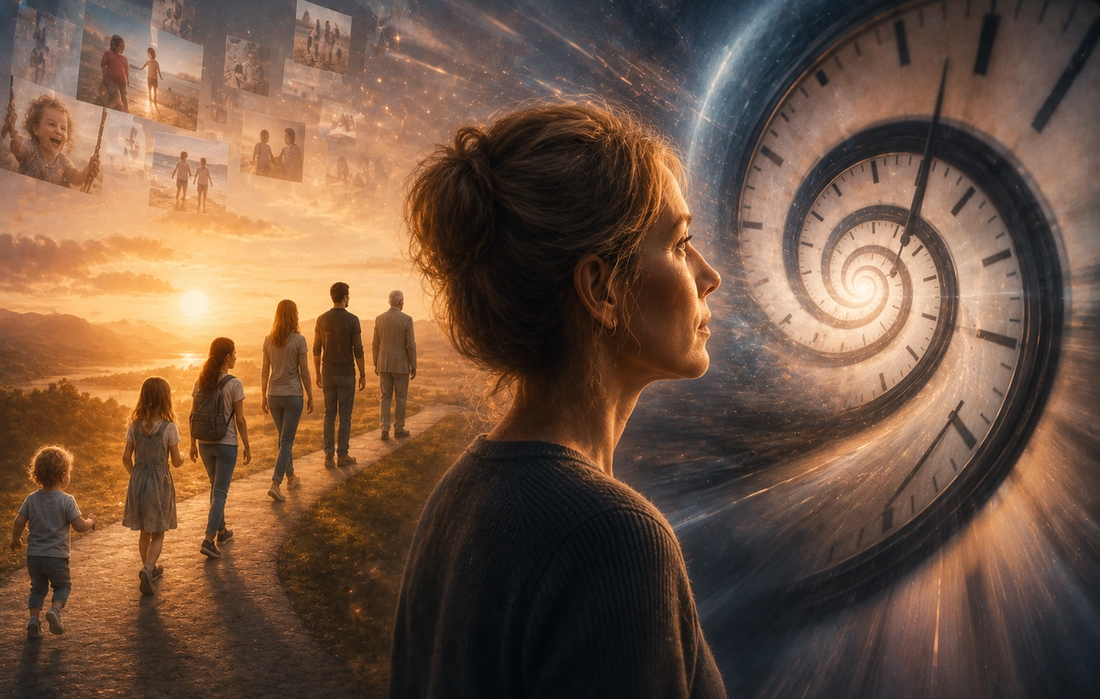
Many people share the same experience: childhood summers seemed endless, school years felt long, and waiting for birthdays or holidays required enormous patience. Yet as adults, months seem to disappear, years pass surprisingly quickly, and it can feel as though time is accelerating with age.
While clocks measure time the same way regardless of age, our perception of time does not. The sensation that life moves faster as we get older is not simply imagination. It reflects how the brain processes experiences, memories, and routines.
Scientists are still exploring exactly why this happens, but several theories help explain why the passing years often seem shorter than they once did.
Key Takeaways
- Time perception is influenced by memory and attention
- Novel experiences tend to make periods feel longer in hindsight
- Routine can make weeks and months seem to pass more quickly
- Aging changes how people experience and remember time
- The feeling of time speeding up is a common psychological phenomenon
1. New Experiences Create Richer Memories
One of the strongest explanations involves novelty.
As children, people encounter new experiences constantly. New schools, friendships, skills, places, and discoveries create a large number of unique memories. Because the brain is processing so much unfamiliar information, those periods often feel longer when remembered later.
As adults, life tends to become more predictable. Work routines, familiar environments, and repeated activities require less mental processing. Because fewer distinctive memories are created, the brain may perceive those periods as having passed more quickly.
In other words, time often feels shorter when fewer memorable events stand out.
2. Routine Compresses Time
Human brains are designed to become efficient. Once an activity becomes familiar, it requires less attention and mental effort.
This efficiency is useful, but it can affect time perception. When days follow similar patterns, they begin to blend together in memory. A week filled with routine activities may feel surprisingly brief because there are fewer distinct moments separating one day from another.
This is why people sometimes feel as though an entire month disappeared without much notice. The events happened, but they left fewer memorable markers behind.
3. Childhood Contains More “Firsts”
Children experience a remarkable number of first-time events. First friendships, first vacations, first achievements, first discoveries, and countless other milestones help define early life.
These experiences often receive special attention from the brain because they are new and emotionally significant. As a result, they become highly memorable.
Adults still encounter new experiences, but generally less frequently. Because novelty decreases over time, the brain may record fewer moments that stand out strongly, contributing to the feeling that years pass more rapidly.
4. Attention Influences Time Perception
How closely people pay attention also affects how time is experienced.
When individuals are deeply focused on a new environment or unfamiliar activity, they tend to notice more details. The brain processes a greater amount of information, making the experience feel richer and more substantial.
When activities become automatic, attention decreases. Familiar routines require less conscious observation, and time may seem to pass more quickly as a result.
In many ways, perceived time is linked not just to duration, but to the amount of attention devoted to an experience.
5. Each Year Becomes a Smaller Fraction of Life
Another popular theory involves perspective.
For a five-year-old child, a single year represents 20 percent of their entire life. For a fifty-year-old adult, a year represents only 2 percent. As people age, each year becomes a smaller proportion of their total lived experience.
While this theory does not explain everything, it may contribute to the subjective feeling that years become shorter over time. The same amount of time occupies a smaller place within the larger context of life.
Why Vacations Often Feel Longer
Interestingly, time perception can shift even in adulthood.
People often notice that vacations, travel experiences, and major life events seem to last longer in memory than ordinary weeks. This is because novel experiences create more mental landmarks and richer memories.
A week spent exploring a new city may feel more substantial in hindsight than several weeks of routine activity. The difference is not the number of days, but the number of memorable experiences packed into them.
This observation supports the idea that memory plays a major role in how time is perceived.
The Secret to Slowing Time Down
If novelty helps expand our perception of time, then one way to make life feel fuller may be surprisingly simple: seek new experiences.
Learning a skill, visiting unfamiliar places, meeting new people, changing routines, or pursuing different hobbies can create more memorable moments. These experiences provide the brain with new information to process and help distinguish one period of life from another.
While they cannot literally slow the clock, they can influence how richly time is experienced and remembered.
Time Isn’t Moving Faster—Your Brain Is Changing
The feeling that time speeds up with age does not mean life is actually accelerating. The clock continues moving at the same pace it always has.
What changes is the way the brain processes experiences, stores memories, and responds to novelty. Childhood feels long because everything is new. Adulthood often feels faster because familiarity becomes more common.
The good news is that perception is not entirely fixed. By staying curious, seeking new experiences, and paying closer attention to everyday life, it may be possible to make time feel a little fuller again.
In the end, the real secret is not slowing time itself. It is giving your brain more reasons to remember it.



MORE IN TRENDING
Being a good student can actually make you a better athlete
If you feel the desire to expand your expertise and start achieving in different aspects of your school life, then move forward from today knowing you don’t have to stay in the lane that you’re supposedly best at. How will you know what you can do if you don’t try? It’s time to break away from restrictive boundaries and push yourself past limits that you once thought impossible to reach.
Jade Josef .

Why playing D&D can be good for you
As you can see, these are just a few of the skills you can pick up from playing Dungeons & Dragons. These skills are directly applicable to other areas of your life too. They can play a major part in improving the way you live, work as part of a team, and socialize. So, the next time someone questions why you are spending so much time playing that ‘silly game’, you’ll be able to tell them!
Jade Josef .

Modern day gadgets with a retro twist
It’s always good to remember where we’ve come from. Nostalgia helps us do that, but just because we yearn for the past doesn’t mean that things were always better back then. The beauty of these gadgets is that we can admire what’s come before while still living in the present.
Emile Bartow .
What the ancients did better than us
As you can see, there are quite a few things that were around in ancient times that still exist today, and many of these things were actually better back then. Of course, better is a relative term, but you need to understand that a lot of these things were more effective and had fewer issues back in ancient times. These are just a handful of the things we reckon could be classed as being better way back when, but you’ll have to make up your own mind.
Jamie Levi .

Behind the Smart Greenhouses
The great thing about greenhouses is that they can run in just about any environment you can think of. That being said, both warmer and colder climates require greenhouses with additional electrical components (heaters or coolers) to create a stable setting for the plants. These new smart greenhouses could make it easier to grow food in areas of the globe with climates that would have the process unfeasible under normal circumstances. In the future, the Earth’s surface might be covered with these “2-in-1” farm/powerplant systems.
Jade Josef .