

Behind the Smart Greenhouses
By Jade Josef on September 29, 2025
What do plants and solar panels have in common? It should be obvious – they convert sunlight into energy. Plants do this through photosynthesis, while solar panels use the photovoltaic process – but the end result is essentially the same. Humans can take advantage of both of these processes, leaving us with a form of energy we can use, whether it’s in the form of electricity or consumable nutrients. That’s all very well and good, but until now, no one has ever tried to take advantage of both processes simultaneously.
Well, what does that mean?
The question is simple: How do we harvest electricity and grow plants using the same rays of light? If you can visualize the process, the problem becomes obvious. “Traditional” solar panels block light from reaching the plants below. This was the major hurdle that Michael Loik knew he had to overcome. The environmental researcher at the University of California was trying to build a “smart greenhouse” that could generate electricity and crops at the same time.
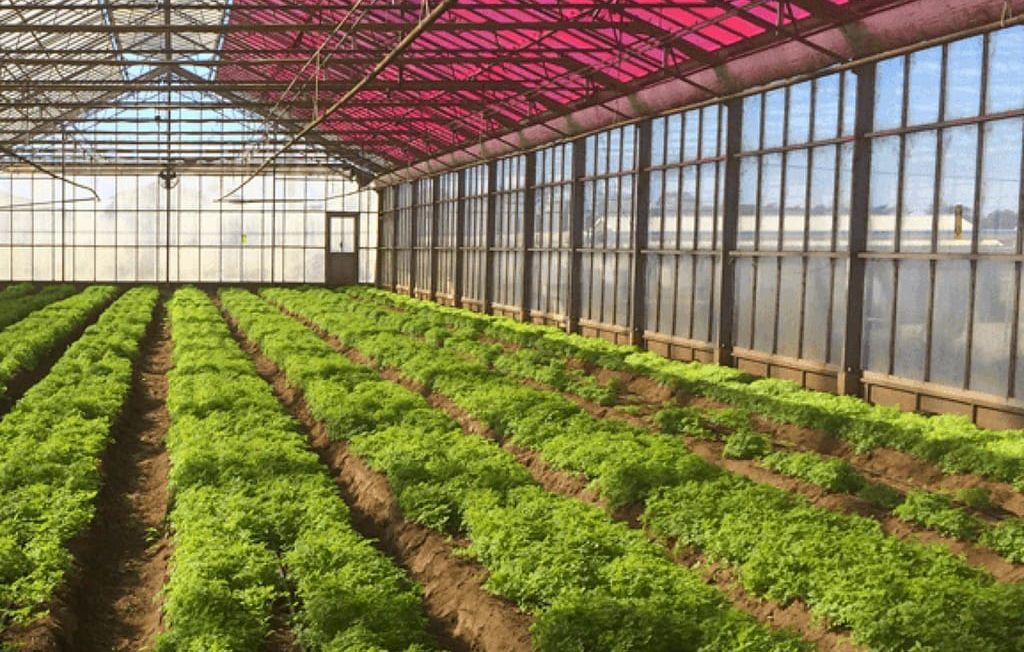
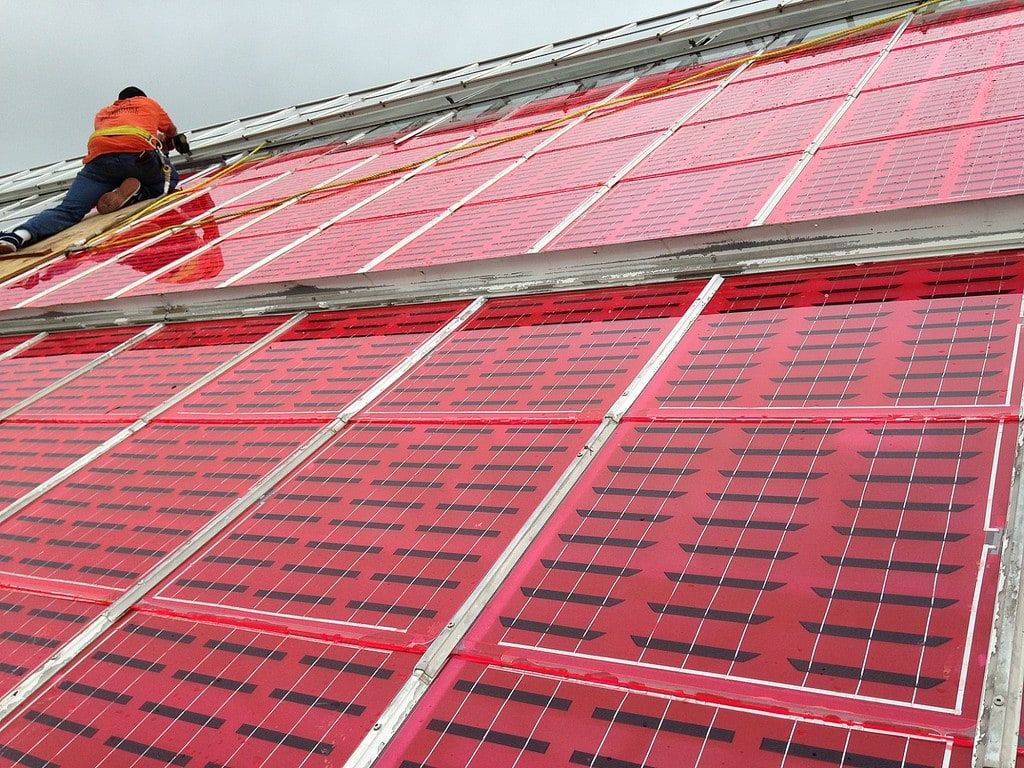
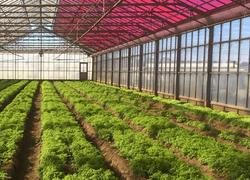
In the end, his breakthrough came when he used revolutionary new solar panels called WSPVs, or “Wavelength-Selective Photovoltaic Systems.” These solar panels are different because they allow certain spectrums of light to pass through, and they’re also more energy-efficient and cheaper to run compared to other panels. Even if you’re not an expert on solar panels, you can easily tell that these models are unique because of their characteristic pink color.
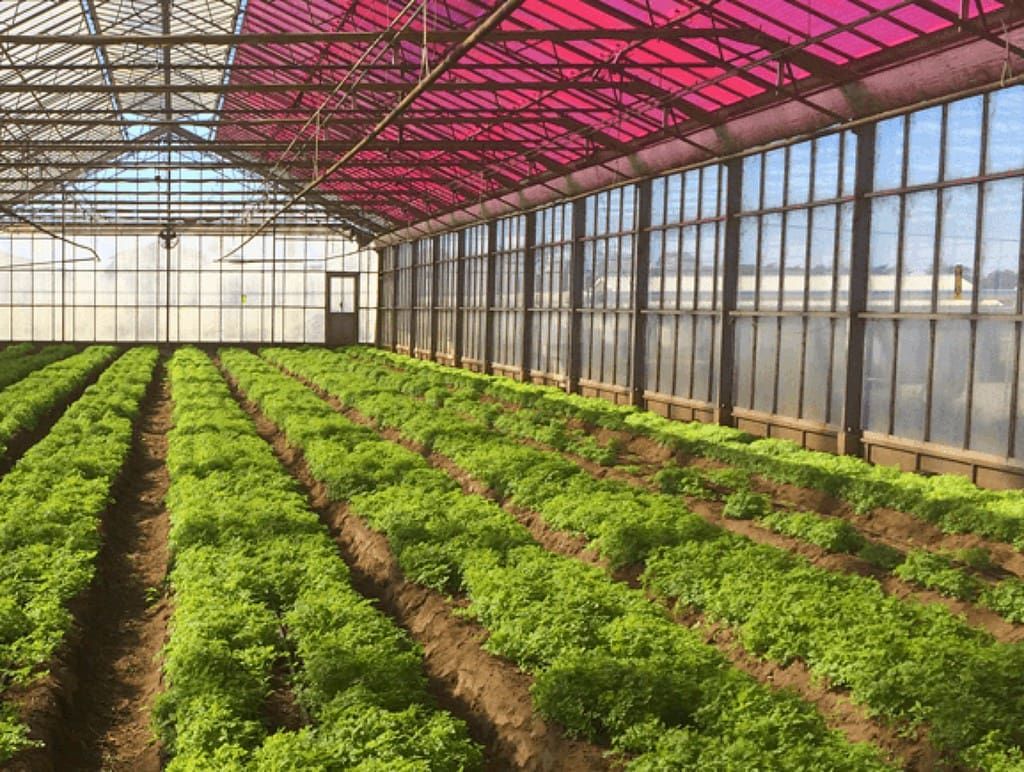
Even though Micheal Loik was on the right track, he still needed to test his theory. Would the plants actually grow under this strange, pinkish light? To figure it out, he grew a variety of different crops in his greenhouses, including tomatoes, cucumbers, peppers, lemons, strawberries, and more. In total, the researcher grew 20 different plant varieties and discovered that about 80% of them grew just as well as they would have under normal conditions.
Here’s the real kicker:
Some plants actually grew better than they would have under normal conditions. Loik isn’t quite sure why 20% of his crops grew more efficiently, but it’s a mystery that deserves an answer. What makes it even more puzzling is that the WSPVs cause the plants to receive less light than they normally would.
Another key discovery was the fact that these plants required less water than those in a normal greenhouse – making these smart greenhouses even more efficient.
So let’s get this straight:
These smart greenhouses can be more productive in terms of plant growth, generate their own electricity, and require less water? It seems like Loik has created something that could seriously upgrade just about every greenhouse on the face of the Earth. Make no mistake, this could have a major effect on our carbon emissions.
Although greenhouses have a pretty stellar reputation in the world of sustainability, the truth is that they can drain tons of electricity. Many greenhouses require internal heating, lighting, monitoring, and irrigation systems. Theoretically, all of these energy requirements would be handled by the ceiling-mounted solar panels – making the greenhouse totally self-sufficient.
The color of the solar panels isn’t just pretty. The reddish shade is perfect for the flowering stage of most plants, as it simulates the spectrum of sunlight that fuels plants late in the growing season. The flowering stage is when plants actually start creating fruit or vegetables, such as tomatoes, cucumbers, or strawberries. Funnily enough, commercial grow lights have been using this reddish light to boost yields for years.
Testing
California was a great place to test these new greenhouses because of its climate. Swamp coolers and other energy-consuming components can draw electricity from the solar panels, and these WSPV’s can help greenhouses in tougher environments approach the “net zero” of energy efficiency.
The great thing about greenhouses is that they can run in just about any environment you can think of. That being said, both warmer and colder climates require greenhouses with additional electrical components (heaters or coolers) to create a stable setting for the plants. These new smart greenhouses could make it easier to grow food in areas of the globe with climates that would have the process unfeasible under normal circumstances. In the future, the Earth’s surface might be covered with these “2-in-1” farm/powerplant systems.



MORE IN TRENDING
Being a good student can actually make you a better athlete
If you feel the desire to expand your expertise and start achieving in different aspects of your school life, then move forward from today knowing you don’t have to stay in the lane that you’re supposedly best at. How will you know what you can do if you don’t try? It’s time to break away from restrictive boundaries and push yourself past limits that you once thought impossible to reach.
Jade Josef .

Why playing D&D can be good for you
As you can see, these are just a few of the skills you can pick up from playing Dungeons & Dragons. These skills are directly applicable to other areas of your life too. They can play a major part in improving the way you live, work as part of a team, and socialize. So, the next time someone questions why you are spending so much time playing that ‘silly game’, you’ll be able to tell them!
Jade Josef .

Modern day gadgets with a retro twist
It’s always good to remember where we’ve come from. Nostalgia helps us do that, but just because we yearn for the past doesn’t mean that things were always better back then. The beauty of these gadgets is that we can admire what’s come before while still living in the present.
Emile Bartow .
What the ancients did better than us
As you can see, there are quite a few things that were around in ancient times that still exist today, and many of these things were actually better back then. Of course, better is a relative term, but you need to understand that a lot of these things were more effective and had fewer issues back in ancient times. These are just a handful of the things we reckon could be classed as being better way back when, but you’ll have to make up your own mind.
Jamie Levi .
Behind the Smart Greenhouses
The great thing about greenhouses is that they can run in just about any environment you can think of. That being said, both warmer and colder climates require greenhouses with additional electrical components (heaters or coolers) to create a stable setting for the plants. These new smart greenhouses could make it easier to grow food in areas of the globe with climates that would have the process unfeasible under normal circumstances. In the future, the Earth’s surface might be covered with these “2-in-1” farm/powerplant systems.
Jade Josef .