

Metagenomic Sequencing Revolutionizes Rapid Sepsis Diagnosis and Treatment
By Jade Josef on February 6, 2026
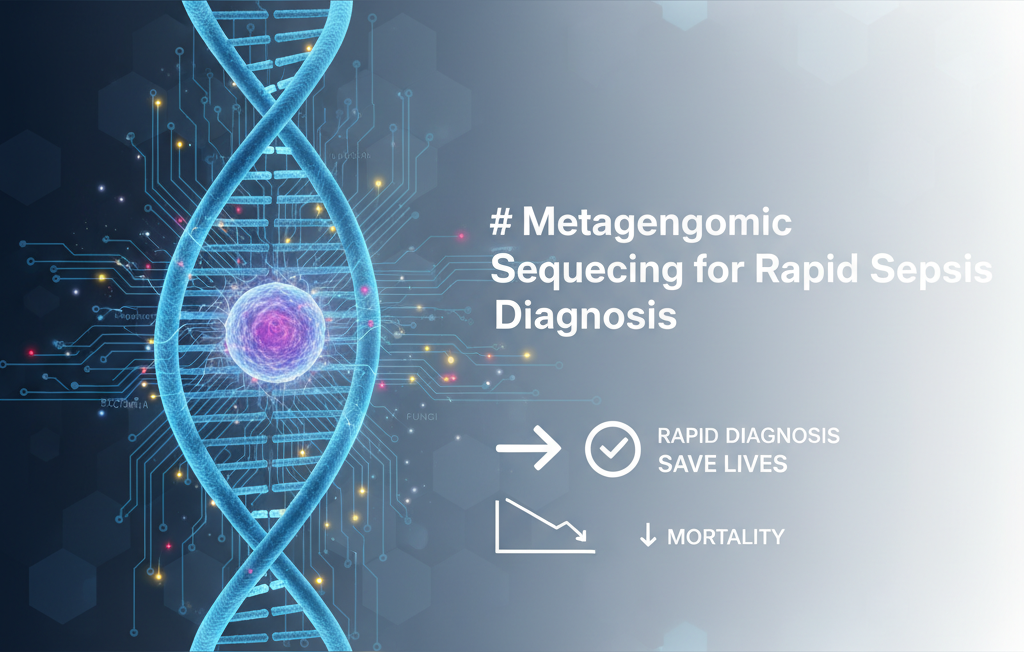
Metagenomic Sequencing for Rapid Sepsis Diagnosis
Sepsis is a silent killer, often lurking undetected until it’s too late. With a mortality rate that can reach 30%, rapid diagnosis is crucial. Traditional diagnostic methods, reliant on blood cultures, can take days, allowing the condition to escalate. Enter metagenomic sequencing—a promising approach that could transform how we identify pathogens in sepsis cases.
Key Takeaways
- Metagenomic sequencing offers a culture-independent method for diagnosing sepsis directly from blood plasma.
- Rapid identification of pathogens is crucial for timely treatment and reducing mortality rates associated with sepsis.
- Nanopore sequencing technology allows for real-time analysis and immediate results, enhancing clinical decision-making.
- This proof-of-concept study shows metagenomic sequencing can detect a broad range of pathogens, including bacteria, viruses, and fungi.
- Early diagnosis through advanced sequencing could significantly decrease the duration of inappropriate antibiotic treatments.
- Metagenomic approaches can help combat antimicrobial resistance by refining targeted therapies.
- The integration of sequencing technology into clinical settings requires collaboration between technologists and healthcare providers for optimal implementation.
The Challenge of Sepsis Diagnosis
Sepsis is often triggered by infections that can be bacterial, viral, or fungal. The initial symptoms are vague—fever, increased heart rate, confusion—often leading to misdiagnosis. Blood cultures, the gold standard for pathogen identification, typically take 48-72 hours to yield results. During this waiting period, patients may deteriorate, and clinicians often resort to broad-spectrum antibiotics, which can contribute to the global issue of antimicrobial resistance.
The need for a faster, more accurate diagnostic tool is critical. This is where metagenomic sequencing steps in.
What is Metagenomic Sequencing?
Metagenomic sequencing is a method that analyzes genetic material directly from environmental samples, allowing for the identification of a multitude of pathogens without needing to culture them first. Utilizing cutting-edge technologies like Nanopore sequencing, this approach can provide comprehensive insights almost in real-time.
In a recent proof-of-concept study, researchers employed this technique on blood plasma from patients suspected of having sepsis. The results were promising: the sequencing could detect a wide variety of pathogens, significantly faster than traditional methods. This could change everything we know about sepsis diagnosis.
The Power of Nanopore Technology
Nanopore sequencing is characterized by its ability to read long strands of DNA or RNA in real-time. Unlike traditional sequencing methods, which can be cumbersome and time-consuming, Nanopore technology allows for immediate data analysis. In a clinical setting, this means that as soon as a blood sample is taken, the sequencing can begin, potentially identifying the causative agent of sepsis within a few hours.
This rapid turnaround can transform patient outcomes. By pinpointing the specific pathogen, healthcare providers can tailor antibiotic therapy more effectively, reducing the window of inappropriate treatment. This is especially critical in sepsis cases, where time is of the essence.
Addressing Antimicrobial Resistance
The rise of antimicrobial resistance poses a significant threat to healthcare worldwide. Ineffective antibiotic use is a primary driver of this crisis. Metagenomic sequencing can help mitigate this issue by enabling precise pathogen identification and more targeted treatment regimens.
Instead of blind prescribing, clinicians can rely on data-driven insights to choose the right antimicrobial therapies. The result? A reduction in unnecessary antibiotic use and a step toward preserving the effectiveness of existing drugs.
The Road Ahead: Implementation Challenges
Despite the promising results, integrating metagenomic sequencing into routine clinical practice is not without challenges. It requires collaboration between technologists and healthcare providers to ensure that the data generated can be interpreted effectively. Training for medical staff on how to use sequencing data in decision-making is crucial.
Moreover, logistical considerations like cost, equipment availability, and data management must be addressed. While the technology offers great potential, its success hinges on overcoming these hurdles to deliver real-time diagnostics at the bedside.
Conclusion
Metagenomic sequencing represents a significant leap forward in the fight against sepsis. By facilitating rapid pathogen detection, it could reshape treatment protocols, reduce mortality rates, and combat antimicrobial resistance. The challenge now lies in bridging the gap between cutting-edge genomics and clinical application. As healthcare moves toward a more data-driven future, the integration of such innovative technologies will be paramount in saving lives. The time to embrace this change is now, for every hour counts in the battle against sepsis.



MORE IN TRENDING
Being a good student can actually make you a better athlete
If you feel the desire to expand your expertise and start achieving in different aspects of your school life, then move forward from today knowing you don’t have to stay in the lane that you’re supposedly best at. How will you know what you can do if you don’t try? It’s time to break away from restrictive boundaries and push yourself past limits that you once thought impossible to reach.
Jade Josef .

Why playing D&D can be good for you
As you can see, these are just a few of the skills you can pick up from playing Dungeons & Dragons. These skills are directly applicable to other areas of your life too. They can play a major part in improving the way you live, work as part of a team, and socialize. So, the next time someone questions why you are spending so much time playing that ‘silly game’, you’ll be able to tell them!
Jade Josef .

Modern day gadgets with a retro twist
It’s always good to remember where we’ve come from. Nostalgia helps us do that, but just because we yearn for the past doesn’t mean that things were always better back then. The beauty of these gadgets is that we can admire what’s come before while still living in the present.
Emile Bartow .

What the ancients did better than us
As you can see, there are quite a few things that were around in ancient times that still exist today, and many of these things were actually better back then. Of course, better is a relative term, but you need to understand that a lot of these things were more effective and had fewer issues back in ancient times. These are just a handful of the things we reckon could be classed as being better way back when, but you’ll have to make up your own mind.
Jamie Levi .

Behind the Smart Greenhouses
The great thing about greenhouses is that they can run in just about any environment you can think of. That being said, both warmer and colder climates require greenhouses with additional electrical components (heaters or coolers) to create a stable setting for the plants. These new smart greenhouses could make it easier to grow food in areas of the globe with climates that would have the process unfeasible under normal circumstances. In the future, the Earth’s surface might be covered with these “2-in-1” farm/powerplant systems.
Jade Josef .