

Next-Generation Sequencing Miniaturization for Rare Diseases Diagnosis
By Jade Josef on February 6, 2026
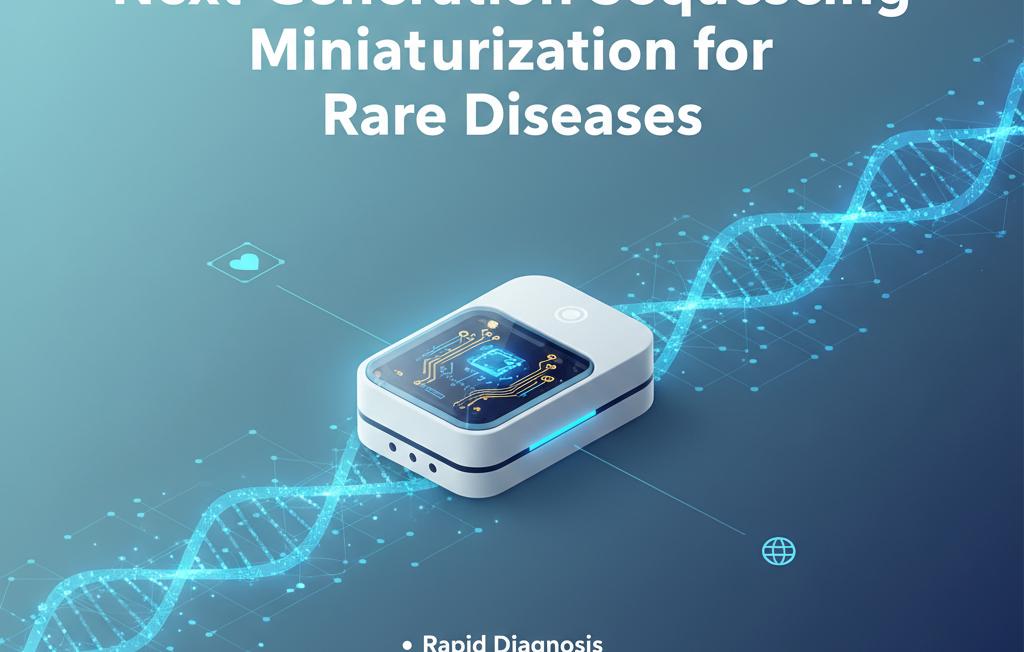
Next-Generation Sequencing Miniaturization for Rare Diseases
Imagine a world where diagnosing rare diseases is as quick and efficient as ordering a coffee. Next-generation sequencing (NGS) is on the brink of making this vision a reality, particularly through miniaturization techniques. This advancement not only promises to enhance the accessibility of genetic testing but also aims to transform the landscape for patients grappling with rare genetic disorders.
Key takeaways
- NGS miniaturization reduces the amount of DNA required for sequencing, making tests accessible for more patients.
- Smaller, portable sequencing devices facilitate on-site testing, speeding up diagnosis and treatment initiation.
- Miniaturized platforms integrate advanced data analysis tools, allowing for real-time results interpretation.
- Innovations in sequencing chemistry improve sensitivity, enabling the detection of low-frequency variants in heterogeneous samples.
- The cost-effectiveness of miniaturized NGS makes it feasible for broader use in clinical settings, especially in underserved populations.
- Collaborative efforts among researchers, clinicians, and technology developers are crucial for advancing these miniaturization efforts.
- Regulatory frameworks are evolving to support the rapid introduction of miniaturized sequencing technologies into healthcare.
The Promise of Miniaturization
The miniaturization of NGS platforms is not just about making devices smaller; it’s about rethinking how we approach genetic testing for rare diseases. Traditional sequencing methods often require substantial amounts of biological material and lengthy processing times. By reducing the sample size needed, miniaturized devices open the door for testing in scenarios where obtaining sufficient samples is challenging, such as in pediatric patients or those with limited access to healthcare facilities.
For instance, a recent study highlighted that miniaturized NGS systems can work effectively with just a few microliters of blood, which is a game changer for young patients who may not provide larger samples. This development is crucial in creating a more inclusive healthcare environment, where diagnostic tests can reach those who need them most.
Speeding Up Diagnosis
Time is often of the essence in rare disease cases. Delayed diagnoses can lead to worsening conditions or even irreversible damage. Miniaturized NGS devices can be deployed in clinical settings, allowing for immediate testing and analysis. This immediacy means that healthcare providers can make informed decisions rapidly, potentially starting treatment sooner.
Imagine a portable sequencing unit that can be taken to remote clinics or hospitals. With such technology, a patient can get tested and receive results within hours rather than weeks. This capability not only improves patient outcomes but also enhances the efficiency of healthcare systems by reducing the backlog of cases waiting for laboratory analysis.
Enhanced Data Analysis
Miniaturization also paves the way for sophisticated data analysis capabilities. Smaller devices often come integrated with advanced software that can analyze genetic sequences in real time. This feature is vital for clinicians who need to interpret complex genetic data quickly to make treatment decisions.
Real-time data analysis means that as the sequencing occurs, potential variants can be flagged immediately. A study published in Frontiers in Genetics illustrated how miniaturized platforms can utilize machine learning algorithms to identify disease-causing mutations more accurately than traditional methods. This enhanced precision is critical in the context of rare diseases, where even minor genetic changes can have significant implications for patient care.
The Cost Factor
Cost remains a significant barrier to widespread genetic testing. Fortunately, miniaturized NGS technologies promise to lower expenses significantly. Smaller devices generally consume fewer reagents and require less infrastructure, which translates to lower operational costs.
As costs decline, the potential for broader access increases. This shift is particularly important for patients in low-resource settings, where the economic burden of genetic testing can be prohibitive. By democratizing access to genetic diagnostics, miniaturization stands to mitigate health disparities and improve outcomes across diverse populations.
A Collaborative Future
The journey toward effective NGS miniaturization is not one that can be undertaken in isolation. Collaboration among researchers, clinicians, and technology developers is essential. Engaging stakeholders from various fields ensures that the devices created meet the actual needs of patients and healthcare providers.
Moreover, as this technology advances, regulatory bodies will need to adapt. New frameworks that accommodate the rapid evolution of sequencing technologies are necessary to ensure that innovations can be integrated into clinical practice swiftly and safely.
Conclusion
Next-generation sequencing miniaturization for rare diseases holds tremendous potential to revolutionize diagnostic medicine. As we stand on the brink of these advancements, the question is not whether this technology will change the landscape of rare disease diagnosis but how quickly it will be adopted. The future is bright for patients, researchers, and healthcare providers alike, as these innovations promise not just to enhance the speed and accuracy of diagnoses but to make them accessible to those who need them the most.



MORE IN TRENDING
Being a good student can actually make you a better athlete
If you feel the desire to expand your expertise and start achieving in different aspects of your school life, then move forward from today knowing you don’t have to stay in the lane that you’re supposedly best at. How will you know what you can do if you don’t try? It’s time to break away from restrictive boundaries and push yourself past limits that you once thought impossible to reach.
Jade Josef .

Why playing D&D can be good for you
As you can see, these are just a few of the skills you can pick up from playing Dungeons & Dragons. These skills are directly applicable to other areas of your life too. They can play a major part in improving the way you live, work as part of a team, and socialize. So, the next time someone questions why you are spending so much time playing that ‘silly game’, you’ll be able to tell them!
Jade Josef .

Modern day gadgets with a retro twist
It’s always good to remember where we’ve come from. Nostalgia helps us do that, but just because we yearn for the past doesn’t mean that things were always better back then. The beauty of these gadgets is that we can admire what’s come before while still living in the present.
Emile Bartow .

What the ancients did better than us
As you can see, there are quite a few things that were around in ancient times that still exist today, and many of these things were actually better back then. Of course, better is a relative term, but you need to understand that a lot of these things were more effective and had fewer issues back in ancient times. These are just a handful of the things we reckon could be classed as being better way back when, but you’ll have to make up your own mind.
Jamie Levi .

Behind the Smart Greenhouses
The great thing about greenhouses is that they can run in just about any environment you can think of. That being said, both warmer and colder climates require greenhouses with additional electrical components (heaters or coolers) to create a stable setting for the plants. These new smart greenhouses could make it easier to grow food in areas of the globe with climates that would have the process unfeasible under normal circumstances. In the future, the Earth’s surface might be covered with these “2-in-1” farm/powerplant systems.
Jade Josef .