

Multi-Omic Integration with High-Plex Proteomics: Revolutionizing Precision Medicine
By German Smolyar on February 6, 2026
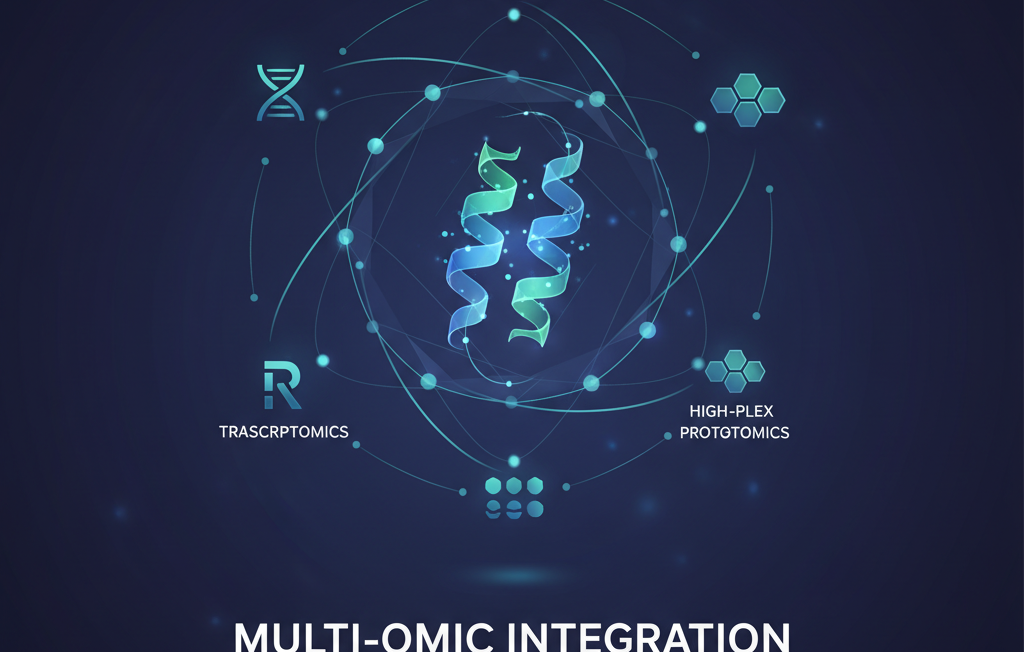
Multi-Omic Integration with High-Plex Proteomics
The evolution of biomedical research is witnessing an unprecedented convergence of various layers of biological information. Multi-omic integration, particularly when paired with high-plex proteomics, is at the forefront of this transformation. This approach not only allows scientists to dissect the intricate web of cellular interactions but also enables precision medicine to thrive by offering a clearer understanding of disease mechanisms and therapeutic targets.
Key Takeaways
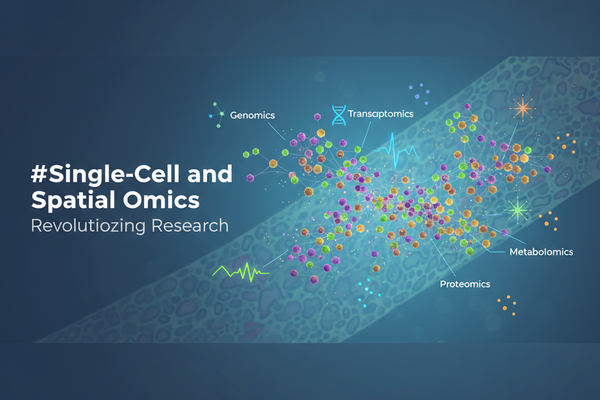
- Multi-omic integration combines data from genomics, transcriptomics, proteomics, and metabolomics to form a comprehensive biological picture.
- High-plex proteomics enables the simultaneous analysis of thousands of proteins, enhancing the resolution of biological insights.
- Precision for Medicine serves as a vital resource, translating complex data into coherent insights for researchers and clinicians alike.
- Patient-specific data integration allows for tailored therapeutic strategies, improving outcomes in personalized medicine.
- Advances in spatial discovery multi-omics enhance the understanding of protein localization and function in tissue contexts.
- Integration of clinical metadata with omic data provides valuable context for interpreting biological findings and patient outcomes.
- Tools and platforms like mass spectrometry are pivotal in facilitating high-plex proteomic analyses, driving forward research capabilities.
The Essence of Multi-Omic Integration
In the ever-complex landscape of biological research, the term "multi-omic" has gained traction. It refers to the integration of multiple omic layers—genomics, transcriptomics, proteomics, and metabolomics—to create a holistic view of biological systems. By synthesizing these diverse data types, researchers can unravel the intricacies of disease pathways and the multifactorial nature of health conditions.
For instance, a study might reveal that a specific protein's expression levels correlate with a patient's response to treatment. When combined with genomic data revealing mutations in associated pathways, insights can be drawn that were previously hidden. This cross-disciplinary approach is essential for developing targeted therapies, as it recognizes that no single omic layer can sufficiently explain complex biological phenomena.
High-Plex Proteomics: A Game Changer
High-plex proteomics is revolutionizing the way researchers analyze proteins. Traditional proteomics often limited researchers to measuring a handful of proteins at a time. In contrast, high-plex technologies allow the simultaneous measurement of over a thousand proteins, drastically reducing the time and resources needed for comprehensive proteomic analysis.
One standout method is mass spectrometry, which identifies and quantifies proteins based on their mass and charge. With advancements in technology, researchers can now generate detailed proteomic profiles at an unprecedented scale. This high-resolution capability is crucial for pinpointing biomarkers for diseases, understanding protein interactions, and elucidating the mechanisms of action for new drugs.
The Role of Integration in Precision Medicine
The true power of multi-omic integration lies in its application to precision medicine. By synthesizing diverse data sources—such as proteins, DNA, RNA, and clinical metadata—researchers can investigate patient-specific cases in a more nuanced manner. This integration allows for a comprehensive understanding of how different biological factors interact within a patient, ultimately leading to tailored therapeutic strategies.
For instance, a recent study demonstrated how integrating high-plex proteomics with clinical data revealed that certain protein expressions were predictive of treatment responses in specific cancer types. This kind of patient-centric analysis can significantly improve treatment efficacy and reduce adverse effects, marking a paradigm shift in how therapies are designed and administered.
Advances in Spatial Discovery Multi-Omics
Spatial discovery multi-omics is another exciting frontier in this field. It enables researchers to map protein localizations within tissues, providing insights into how proteins interact in their natural environments. This spatial context is crucial for understanding diseases like cancer, where the tumor microenvironment plays a pivotal role in progression and treatment response.
By integrating a high-plex discovery proteome atlas with transcriptomic and genomic data, researchers can visualize how specific proteins contribute to cellular functions in various tissue contexts. This holistic view not only sheds light on fundamental biological processes but also opens avenues for identifying novel therapeutic targets.
Conclusion
The integration of multi-omic data with high-plex proteomics is not just a trend; it is becoming the backbone of modern biomedical research. As more tools and technologies emerge, the potential for these methods to refine our understanding of health and disease continues to grow. The challenge ahead lies in effectively translating this wealth of information into actionable insights that can transform patient care. As the landscape evolves, embracing this integrative approach will be key for researchers and clinicians striving to unlock the mysteries of human biology.

MORE IN TRENDING
Being a good student can actually make you a better athlete
If you feel the desire to expand your expertise and start achieving in different aspects of your school life, then move forward from today knowing you don’t have to stay in the lane that you’re supposedly best at. How will you know what you can do if you don’t try? It’s time to break away from restrictive boundaries and push yourself past limits that you once thought impossible to reach.
Jade Josef .

Why playing D&D can be good for you
As you can see, these are just a few of the skills you can pick up from playing Dungeons & Dragons. These skills are directly applicable to other areas of your life too. They can play a major part in improving the way you live, work as part of a team, and socialize. So, the next time someone questions why you are spending so much time playing that ‘silly game’, you’ll be able to tell them!
Jade Josef .

Modern day gadgets with a retro twist
It’s always good to remember where we’ve come from. Nostalgia helps us do that, but just because we yearn for the past doesn’t mean that things were always better back then. The beauty of these gadgets is that we can admire what’s come before while still living in the present.
Emile Bartow .

What the ancients did better than us
As you can see, there are quite a few things that were around in ancient times that still exist today, and many of these things were actually better back then. Of course, better is a relative term, but you need to understand that a lot of these things were more effective and had fewer issues back in ancient times. These are just a handful of the things we reckon could be classed as being better way back when, but you’ll have to make up your own mind.
Jamie Levi .

Behind the Smart Greenhouses
The great thing about greenhouses is that they can run in just about any environment you can think of. That being said, both warmer and colder climates require greenhouses with additional electrical components (heaters or coolers) to create a stable setting for the plants. These new smart greenhouses could make it easier to grow food in areas of the globe with climates that would have the process unfeasible under normal circumstances. In the future, the Earth’s surface might be covered with these “2-in-1” farm/powerplant systems.
Jade Josef .