

Long-Read Sequencing Revolutionizes Detection of Repeat Expansion Disorders
By Roy Kaden on February 6, 2026
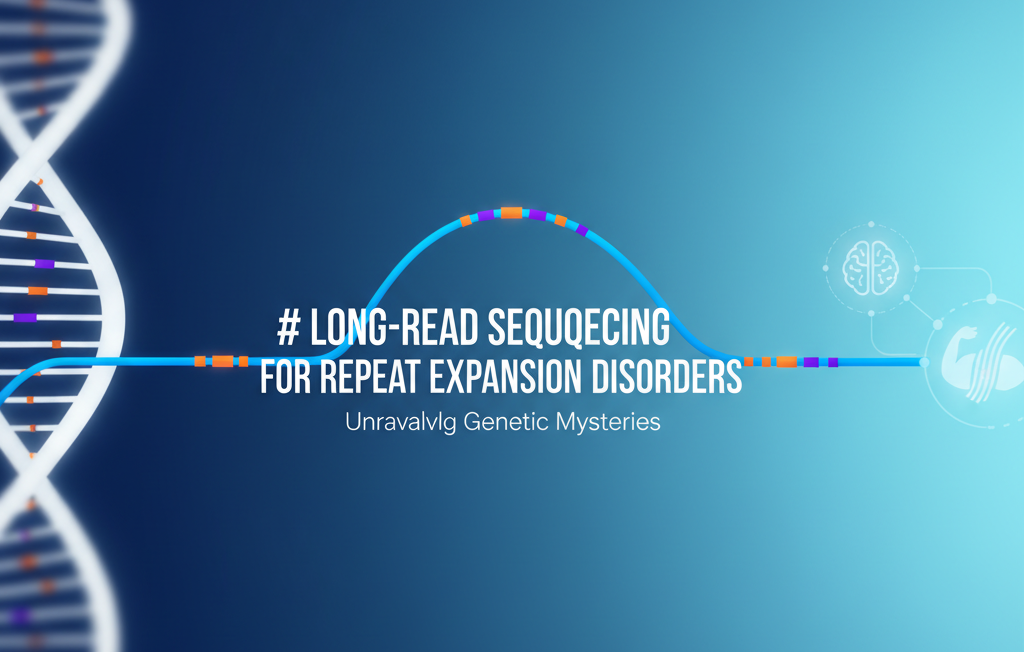
Long-Read Sequencing for Repeat Expansion Disorders
Imagine a world where genetic disorders could be pinpointed with astonishing accuracy, unraveling the mysteries held within our DNA. This is not just a dream; it's the promise of long-read sequencing technology, especially vital for understanding repeat expansion disorders. These conditions, characterized by the abnormal duplication of DNA sequences, have long challenged scientists due to their complex nature. Long-read sequencing is emerging as a game-changer in this field, redefining how we detect and characterize these elusive genetic anomalies.
Key Takeaways
- Long-read sequencing offers a significant advantage over short-read sequencing, providing better resolution for complex genomic regions.
- It effectively identifies repeat expansions, which are often missed in traditional sequencing methods.
- Tools like PacBio and Oxford Nanopore are at the forefront of long-read sequencing technology, enabling comprehensive analysis.
- Characterizing repeat expansion disorders can lead to more accurate diagnoses and tailored treatment plans.
- Long-read sequencing is an essential technology for understanding disorders like Huntington's disease and myotonic dystrophy.
- Advances in bioinformatics are crucial for interpreting long-read sequencing data, facilitating the identification of pathogenic repeat expansions.
- Collaborative efforts among researchers and clinicians are driving the adoption of long-read sequencing in clinical settings.
Understanding Repeat Expansion Disorders
Repeat expansion disorders, such as Huntington's disease and myotonic dystrophy, arise from the excessive repetition of specific DNA sequences. These mutations can lead to neurodegeneration, muscle weakness, and various other debilitating symptoms. Historically, the detection of these expansions has been fraught with challenges, particularly when using short-read sequencing technologies. Short reads often fall short in accurately mapping these repetitive regions, leading to missed diagnoses and incomplete characterizations of the disorders.
Long-read sequencing provides a viable solution. Unlike traditional methods that generate short fragments of DNA, long-read technologies can read longer stretches of genetic material. This capability is crucial for accurately identifying repeat expansions, allowing for a clearer picture of the genomic landscape associated with these disorders.
The Technology Behind Long-Read Sequencing
Two main platforms dominate the long-read sequencing landscape: Pacific Biosciences (PacBio) and Oxford Nanopore Technologies. Both have developed methods that can sequence long stretches of DNA, which is particularly beneficial for regions containing repetitive sequences.
PacBio’s Single Molecule, Real-Time (SMRT) sequencing can generate reads that are tens of thousands of base pairs long. This allows researchers to capture entire repeat regions in a single read, vastly improving the chances of detecting expansions. On the other hand, Oxford Nanopore’s technology offers portable sequencing capabilities, enabling real-time analysis of genetic material in various settings. Both platforms provide researchers with powerful tools to unravel the complexities of repeat expansion disorders.
The Role of Bioinformatics
While long-read sequencing offers remarkable capabilities, it generates vast amounts of data that require sophisticated analysis. Bioinformatics plays a vital role in interpreting this data, transforming raw sequences into clinically actionable insights. Advanced algorithms can help identify pathogenic repeat expansions and assess the potential impact of these mutations on patient health.
Recent advancements in bioinformatics tools have made it easier to manage and analyze long-read sequencing data. These tools can automate the detection of repeat expansions and improve the accuracy of characterizations, driving better patient outcomes. In essence, bioinformatics is the bridge between raw genetic data and meaningful clinical applications.
Moving Towards Clinical Applications
The integration of long-read sequencing in clinical practice is gaining momentum. As researchers uncover the genetic underpinnings of repeat expansion disorders, the potential for personalized medicine grows. Accurate detection and characterization of these mutations can lead to tailored treatment strategies, ultimately improving the quality of life for affected individuals.
Collaborative efforts between geneticists, clinicians, and bioinformaticians are essential to making long-read sequencing a standard diagnostic tool. By pooling expertise and resources, the scientific community can ensure that this technology reaches its full potential in diagnosing and treating repeat expansion disorders.
Conclusion
Long-read sequencing stands at the forefront of genetic research, particularly for repeat expansion disorders that have long eluded accurate detection. By harnessing the power of this technology, researchers and clinicians can unlock new pathways to diagnosis and treatment, transforming the lives of patients. The journey is just beginning, and as we continue to refine these methods and collaborate across disciplines, the promise of precision medicine in genetic disorders becomes a tangible reality. The future is bright, and it’s time to embrace the revolution in genomics that long-read sequencing heralds.



MORE IN TRENDING
Being a good student can actually make you a better athlete
If you feel the desire to expand your expertise and start achieving in different aspects of your school life, then move forward from today knowing you don’t have to stay in the lane that you’re supposedly best at. How will you know what you can do if you don’t try? It’s time to break away from restrictive boundaries and push yourself past limits that you once thought impossible to reach.
Jade Josef .

Why playing D&D can be good for you
As you can see, these are just a few of the skills you can pick up from playing Dungeons & Dragons. These skills are directly applicable to other areas of your life too. They can play a major part in improving the way you live, work as part of a team, and socialize. So, the next time someone questions why you are spending so much time playing that ‘silly game’, you’ll be able to tell them!
Jade Josef .

Modern day gadgets with a retro twist
It’s always good to remember where we’ve come from. Nostalgia helps us do that, but just because we yearn for the past doesn’t mean that things were always better back then. The beauty of these gadgets is that we can admire what’s come before while still living in the present.
Emile Bartow .

What the ancients did better than us
As you can see, there are quite a few things that were around in ancient times that still exist today, and many of these things were actually better back then. Of course, better is a relative term, but you need to understand that a lot of these things were more effective and had fewer issues back in ancient times. These are just a handful of the things we reckon could be classed as being better way back when, but you’ll have to make up your own mind.
Jamie Levi .

Behind the Smart Greenhouses
The great thing about greenhouses is that they can run in just about any environment you can think of. That being said, both warmer and colder climates require greenhouses with additional electrical components (heaters or coolers) to create a stable setting for the plants. These new smart greenhouses could make it easier to grow food in areas of the globe with climates that would have the process unfeasible under normal circumstances. In the future, the Earth’s surface might be covered with these “2-in-1” farm/powerplant systems.
Jade Josef .