

How Open-Source Software Powers the Internet
By Jade Josef on June 11, 2026
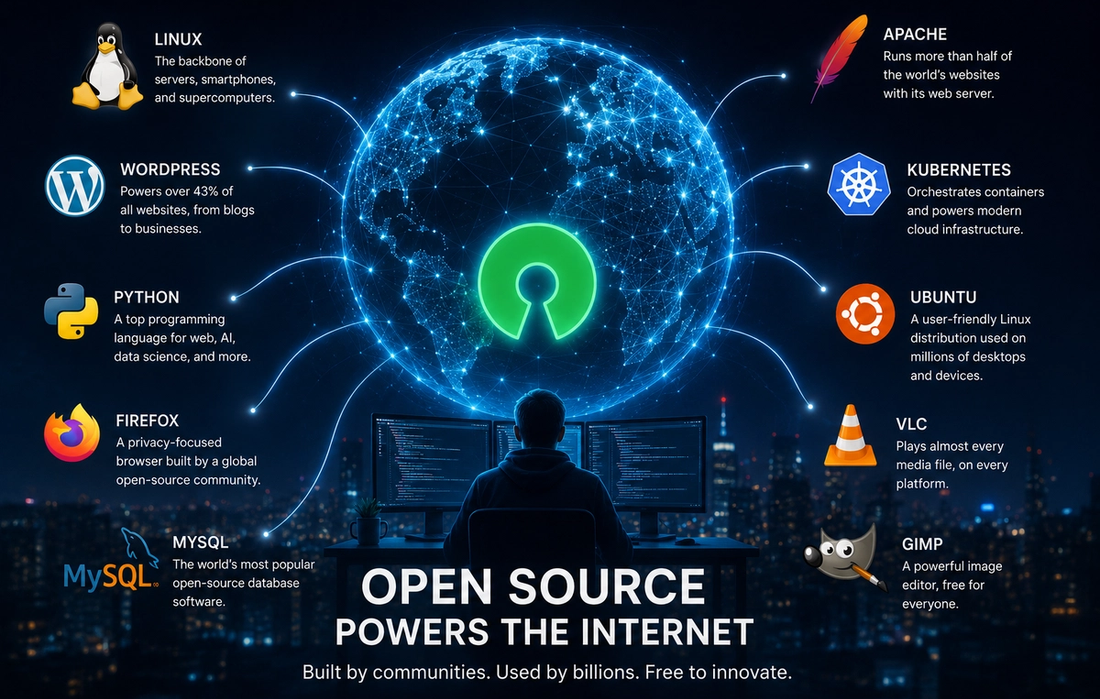
Most people interact with the internet every day without thinking much about the technology that makes it possible. Websites load in seconds, apps connect users across continents, and digital services operate around the clock. From the outside, the internet appears to function seamlessly.
Behind the scenes, however, much of the modern internet relies on software that anyone can inspect, modify, and share. This is known as open-source software, and it forms a critical foundation of the digital world. While many users have never heard of the projects involved, open-source tools help power everything from websites and cloud services to smartphones and online businesses.
The internet as we know it would look very different without them.
Key Takeaways
- Open-source software allows anyone to view and modify source code
- Many of the internet’s core technologies are open source
- Businesses, governments, and developers rely heavily on open-source projects
- Collaboration helps improve security, reliability, and innovation
- Much of the modern digital economy depends on open-source infrastructure
1. What Is Open-Source Software?
Software is built using source code, the instructions that tell a computer how to perform specific tasks. In many commercial products, that code is private and controlled by a company.
Open-source software takes a different approach. The source code is made publicly available, allowing developers to study it, improve it, and contribute changes. Depending on the license, individuals and organizations can often use the software for free.
This collaborative model enables communities of developers around the world to work together on shared projects.
2. Much of the Internet Runs on Open-Source Infrastructure
Many people assume the internet is powered primarily by large technology companies. While major companies play an important role, much of the underlying infrastructure relies on open-source software.
Web servers, operating systems, databases, programming frameworks, and networking tools frequently originate from open-source projects. When someone visits a website, streams a video, or uses an online service, there is a good chance open-source technology is involved somewhere in the process.
These tools often operate invisibly, making them easy to overlook despite their importance.
3. Open Source Encourages Innovation
One reason open-source software has become so influential is that it lowers barriers to innovation.
Developers do not need to build every tool from scratch. Instead, they can use existing open-source projects as foundations for new applications and services. This allows individuals, startups, and organizations to develop products more quickly and efficiently.
Many successful technology companies have built their services on top of open-source technologies, benefiting from years of community-driven development.
4. Collaboration Improves Reliability
Open-source projects are often maintained by large communities of contributors. Developers from different countries, industries, and backgrounds work together to identify problems, fix bugs, and improve performance.
Because the code is publicly available, issues can be reviewed and addressed by many people rather than a single organization. This collaborative process often helps improve reliability and accelerate development.
While no software is perfect, community involvement can make open-source projects remarkably robust over time.
5. It Powers More Than Websites
Open-source software influences far more than traditional websites.
Smartphones, cloud computing platforms, artificial intelligence tools, operating systems, web browsers, and countless business applications rely on open-source components. Even products sold by major technology companies often incorporate open-source technologies behind the scenes.
As digital systems become more interconnected, the influence of open source continues to expand.
Why Companies Support Open Source
At first glance, it may seem surprising that businesses invest time and resources into software they do not exclusively own. In reality, many organizations benefit from shared infrastructure.
Contributing to open-source projects helps companies improve the tools they depend on while reducing development costs. It also encourages industry-wide standards and allows organizations to collaborate on common challenges.
As a result, many of the world’s largest technology companies actively support open-source initiatives.
The Invisible Foundation of the Digital World
Open-source software rarely receives the same attention as consumer-facing products. Most users never see the code, meet the contributors, or think about the systems running in the background.
Yet these projects play a critical role in keeping the internet functional, secure, and accessible. They provide the infrastructure that supports countless digital experiences people rely on every day.
Without open-source software, many of the services that define modern life would be far more difficult and expensive to build.
The Internet’s Collaborative Engine
One of the most remarkable aspects of open-source software is that it demonstrates the power of large-scale collaboration. Thousands of developers, often working independently, contribute to projects that benefit millions or even billions of users.
This model has helped shape the modern internet by making technology more accessible, adaptable, and innovative. While most people never notice it, open source is woven into the fabric of the online world.
The next time you browse a website, use an app, or access a digital service, there is a good chance open-source software is quietly helping make that experience possible.






MORE IN TRENDING
Being a good student can actually make you a better athlete
If you feel the desire to expand your expertise and start achieving in different aspects of your school life, then move forward from today knowing you don’t have to stay in the lane that you’re supposedly best at. How will you know what you can do if you don’t try? It’s time to break away from restrictive boundaries and push yourself past limits that you once thought impossible to reach.
Jade Josef .

Why playing D&D can be good for you
As you can see, these are just a few of the skills you can pick up from playing Dungeons & Dragons. These skills are directly applicable to other areas of your life too. They can play a major part in improving the way you live, work as part of a team, and socialize. So, the next time someone questions why you are spending so much time playing that ‘silly game’, you’ll be able to tell them!
Jade Josef .

Modern day gadgets with a retro twist
It’s always good to remember where we’ve come from. Nostalgia helps us do that, but just because we yearn for the past doesn’t mean that things were always better back then. The beauty of these gadgets is that we can admire what’s come before while still living in the present.
Emile Bartow .

What the ancients did better than us
As you can see, there are quite a few things that were around in ancient times that still exist today, and many of these things were actually better back then. Of course, better is a relative term, but you need to understand that a lot of these things were more effective and had fewer issues back in ancient times. These are just a handful of the things we reckon could be classed as being better way back when, but you’ll have to make up your own mind.
Jamie Levi .

Behind the Smart Greenhouses
The great thing about greenhouses is that they can run in just about any environment you can think of. That being said, both warmer and colder climates require greenhouses with additional electrical components (heaters or coolers) to create a stable setting for the plants. These new smart greenhouses could make it easier to grow food in areas of the globe with climates that would have the process unfeasible under normal circumstances. In the future, the Earth’s surface might be covered with these “2-in-1” farm/powerplant systems.
Jade Josef .