

How Do Vaccines Actually Work? (Explained Simply)
By Emile Bartow on June 11, 2026
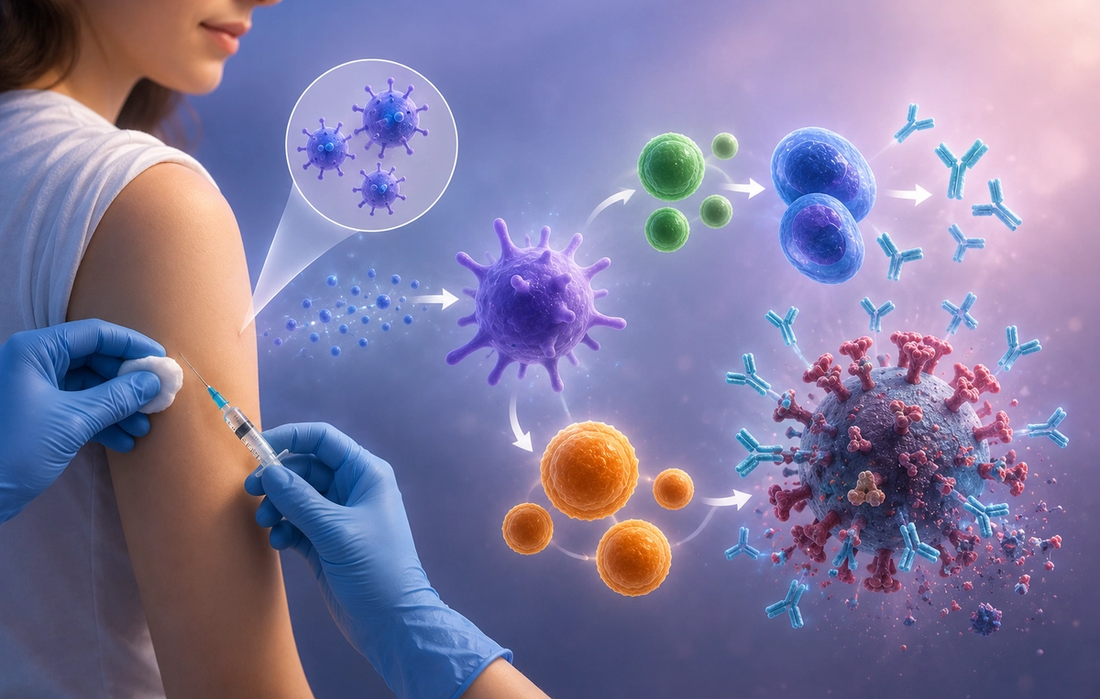
Vaccines are one of the most important medical tools ever developed, yet many people are unsure about how they actually work. The idea can seem confusing at first: how can exposing the body to part of a virus or bacteria help protect against future illness?
The answer lies in the way the immune system learns. Vaccines essentially act as training exercises for the body’s natural defenses. They teach the immune system how to recognize and respond to a specific threat before a real infection occurs.
By preparing the body in advance, vaccines help reduce the risk of serious illness and make it easier for the immune system to respond quickly when needed.
Key Takeaways
- Vaccines train the immune system to recognize harmful germs
- They help the body prepare for future infections
- Vaccines do not usually cause the disease they are designed to prevent
- Immune memory allows the body to respond faster during future exposure
- Vaccination reduces the risk of severe illness and complications
1. Your Immune System Is Your Body’s Defense Team
The immune system is responsible for protecting the body from harmful invaders such as viruses and bacteria.
When a new germ enters the body, the immune system must first identify it and figure out how to fight it. This process takes time, which is why people often become sick before their bodies can fully respond.
Once the immune system successfully defeats the infection, it usually remembers the germ. This memory allows it to react much more quickly if the same threat appears again in the future.
2. Vaccines Teach the Immune System Without Causing the Full Disease
A vaccine introduces the immune system to a harmless version or piece of a virus or bacteria. Depending on the type of vaccine, this may involve an inactivated germ, a weakened version, or instructions that help the body recognize part of the pathogen.
Because the immune system sees this material as unfamiliar, it begins practicing its defense response. It learns what the threat looks like and prepares the tools needed to fight it.
The key advantage is that this learning process occurs without the person experiencing the full effects of the disease.
3. The Body Creates Protective Defenses
After vaccination, the immune system produces specialized proteins called antibodies. These antibodies are designed to recognize and help neutralize the specific virus or bacteria the vaccine targets.
The body also creates immune cells that help coordinate future responses. Together, these defenses act like a detailed reference guide for the immune system.
If the real infection appears later, the body is already familiar with the threat and can respond much more quickly.
4. Immune Memory Is the Secret
One of the most important features of the immune system is its ability to remember.
After vaccination, memory cells remain in the body and help preserve information about the pathogen. Some vaccines provide long-lasting protection, while others may require booster doses to strengthen or refresh this memory over time.
Because of immune memory, the body can often stop an infection before it causes serious illness or significantly reduce its severity.
5. Vaccines Help Protect Communities Too
Vaccination does not only benefit individuals. When large numbers of people are protected against a disease, it becomes harder for that disease to spread through a population.
This can help protect vulnerable individuals who may be unable to receive certain vaccines or who have weakened immune systems.
As more people develop immunity, outbreaks become less common and communities become safer overall.
Why Side Effects Can Happen
Some people experience mild side effects after vaccination, such as soreness at the injection site, fatigue, headache, or a low fever.
These reactions are typically signs that the immune system is responding and building protection. They are generally temporary and much less risky than the diseases the vaccines are designed to prevent.
Serious side effects are uncommon, and vaccines undergo extensive testing and monitoring before and after approval.
Training Before the Real Test
A useful way to think about vaccines is to imagine a fire drill. The purpose of a fire drill is not to create an emergency. It is to prepare people so they know how to respond if one occurs.
Vaccines work similarly. They allow the immune system to practice recognizing and fighting a threat before a real infection happens.
Because the body has already completed its training, it can react faster and more effectively when faced with the actual disease.
A Simple but Powerful Idea
The basic principle behind vaccines is surprisingly simple: teach the immune system what to look for before it encounters the real threat.
This preparation allows the body to respond more quickly, reduces the risk of severe illness, and helps protect entire communities from dangerous diseases.
While the science behind vaccines is complex, the goal is straightforward. They help the immune system learn in advance so that when the real challenge arrives, it is ready.



MORE IN TRENDING
Being a good student can actually make you a better athlete
If you feel the desire to expand your expertise and start achieving in different aspects of your school life, then move forward from today knowing you don’t have to stay in the lane that you’re supposedly best at. How will you know what you can do if you don’t try? It’s time to break away from restrictive boundaries and push yourself past limits that you once thought impossible to reach.
Jade Josef .

Why playing D&D can be good for you
As you can see, these are just a few of the skills you can pick up from playing Dungeons & Dragons. These skills are directly applicable to other areas of your life too. They can play a major part in improving the way you live, work as part of a team, and socialize. So, the next time someone questions why you are spending so much time playing that ‘silly game’, you’ll be able to tell them!
Jade Josef .

Modern day gadgets with a retro twist
It’s always good to remember where we’ve come from. Nostalgia helps us do that, but just because we yearn for the past doesn’t mean that things were always better back then. The beauty of these gadgets is that we can admire what’s come before while still living in the present.
Emile Bartow .
What the ancients did better than us
As you can see, there are quite a few things that were around in ancient times that still exist today, and many of these things were actually better back then. Of course, better is a relative term, but you need to understand that a lot of these things were more effective and had fewer issues back in ancient times. These are just a handful of the things we reckon could be classed as being better way back when, but you’ll have to make up your own mind.
Jamie Levi .

Behind the Smart Greenhouses
The great thing about greenhouses is that they can run in just about any environment you can think of. That being said, both warmer and colder climates require greenhouses with additional electrical components (heaters or coolers) to create a stable setting for the plants. These new smart greenhouses could make it easier to grow food in areas of the globe with climates that would have the process unfeasible under normal circumstances. In the future, the Earth’s surface might be covered with these “2-in-1” farm/powerplant systems.
Jade Josef .