

Fiber Optic Cables for High-Accuracy Earthquake Detection
By Jamie Levi on February 6, 2026
Fiber Optic Cables for High-Accuracy Earthquake Detection
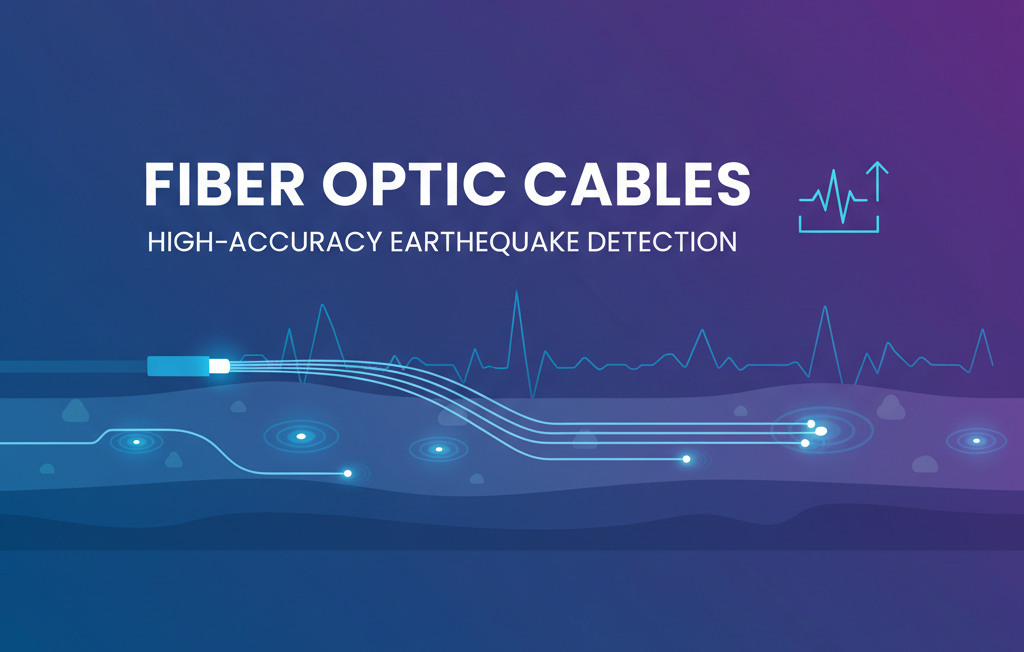
Imagine a world where detecting earthquakes is as seamless as sending a text message. Fiber optic cables, ubiquitous in our communication infrastructure, are stepping into this role, transforming seismic monitoring with unprecedented accuracy. These cables, embedded in the Earth, could change how communities respond to seismic events, potentially saving lives and minimizing damage.
Key Takeaways
- Fiber optic cables utilize light to detect ground motion, offering real-time monitoring of seismic activity.
- The technology is based on measuring tiny imperfections in the cable that reflect light back to the source.
- Existing telecommunication infrastructure can be repurposed, reducing costs for earthquake detection systems.
- Fiber optic sensing provides enhanced spatial resolution, detecting minor ground shifts that traditional sensors might miss.
- This technology is already being deployed in various regions, integrating with existing networks for better disaster preparedness.
- Real-time data from fiber optic cables can improve early warning systems, giving communities more time to react.
- Research indicates that this method can significantly increase the accuracy of earthquake forecasts.
Understanding Fiber Optic Technology
Fiber optic cables are thin strands of glass or plastic that transmit data as pulses of light. When these cables are laid underground, they can pick up vibrations caused by seismic activity. As seismic waves travel through the Earth, they impact the cable, causing minute changes in the light that travels through it. This phenomenon allows scientists to detect and analyze ground movements with a precision that traditional sensors cannot match.
The magic lies in the imperfections within the glass. These tiny anomalies reflect a small portion of the light back to the source, creating a pattern that can be analyzed for signs of seismic activity. Each fiber optic cable can monitor a significant length of ground, providing detailed information about where and how an earthquake is occurring.
Cost-Effective and Efficient
One of the most compelling advantages of using fiber optic cables for earthquake detection is cost-effectiveness. The telecommunication industry has already invested billions in laying down these cables worldwide. By repurposing existing infrastructure, researchers can deploy advanced seismic monitoring systems without the need for extensive new installations.
This approach not only saves money but also accelerates the timeline for implementation. Communities in seismically active areas can leverage this technology to enhance their emergency response systems. It’s a win-win: utilizing what’s already in place while upgrading safety measures.
Enhanced Detection Capabilities
The spatial resolution provided by fiber optic sensing is a game changer. Traditional seismic sensors are generally limited in number and placement, which can lead to blind spots in monitoring. Fiber optic cables, on the other hand, can stretch for miles, offering continuous coverage along their length. This means that even minor tremors, which can precede larger events, can be detected.
Research has shown that this technology can capture ground movements as subtle as a few microns. Such sensitivity allows scientists to analyze seismic events in real time, improving the understanding of how earthquakes develop. This data can then feed into predictive models, enhancing earthquake forecasting and preparedness.
Real-World Applications
Countries like Japan and the United States are already piloting fiber optic sensing for earthquake detection. In Japan, where the risk of seismic activity is high, researchers are integrating this technology with existing monitoring systems to improve response times during earthquakes. In California, fiber optic cables embedded in highways and buildings are being tested for their effectiveness in real-time monitoring.
The data collected from these sensors is invaluable for urban planning and disaster management. It helps determine building codes and emergency preparedness strategies, ensuring that communities are better equipped to handle seismic events.
A Future of Preparedness
As fiber optic technology continues to evolve, its role in earthquake detection will only grow. The potential for real-time data analysis could revolutionize early warning systems, offering critical seconds for people to take cover or evacuate.
In a world increasingly affected by climate change and geological instability, investing in technologies like fiber optic sensing is not just wise; it's necessary. Communities need to embrace these advancements to build resilient infrastructure that protects lives.
Imagine living in a world where an earthquake warning arrives before you even feel a tremor. With fiber optic cables, that future could be just around the corner.






MORE IN TRENDING
Being a good student can actually make you a better athlete
If you feel the desire to expand your expertise and start achieving in different aspects of your school life, then move forward from today knowing you don’t have to stay in the lane that you’re supposedly best at. How will you know what you can do if you don’t try? It’s time to break away from restrictive boundaries and push yourself past limits that you once thought impossible to reach.
Jade Josef .

Why playing D&D can be good for you
As you can see, these are just a few of the skills you can pick up from playing Dungeons & Dragons. These skills are directly applicable to other areas of your life too. They can play a major part in improving the way you live, work as part of a team, and socialize. So, the next time someone questions why you are spending so much time playing that ‘silly game’, you’ll be able to tell them!
Jade Josef .

Modern day gadgets with a retro twist
It’s always good to remember where we’ve come from. Nostalgia helps us do that, but just because we yearn for the past doesn’t mean that things were always better back then. The beauty of these gadgets is that we can admire what’s come before while still living in the present.
Emile Bartow .
What the ancients did better than us
As you can see, there are quite a few things that were around in ancient times that still exist today, and many of these things were actually better back then. Of course, better is a relative term, but you need to understand that a lot of these things were more effective and had fewer issues back in ancient times. These are just a handful of the things we reckon could be classed as being better way back when, but you’ll have to make up your own mind.
Jamie Levi .

Behind the Smart Greenhouses
The great thing about greenhouses is that they can run in just about any environment you can think of. That being said, both warmer and colder climates require greenhouses with additional electrical components (heaters or coolers) to create a stable setting for the plants. These new smart greenhouses could make it easier to grow food in areas of the globe with climates that would have the process unfeasible under normal circumstances. In the future, the Earth’s surface might be covered with these “2-in-1” farm/powerplant systems.
Jade Josef .