

Cell-Free Protein Synthesis Revolutionized by AI and Automation
By Emile Bartow on February 6, 2026
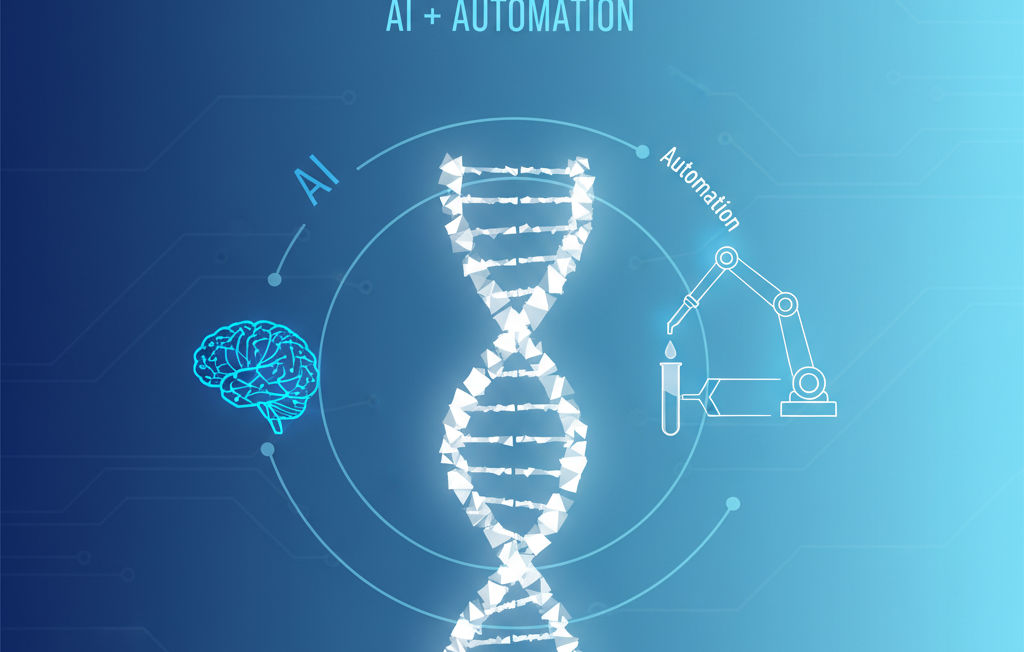
Cell-Free Protein Synthesis with AI and Automation
The landscape of protein synthesis is evolving rapidly, and at the forefront of this change is cell-free protein synthesis (CFPS). By harnessing the power of artificial intelligence (AI) and automation, researchers are not only streamlining the protein production process but also making it more cost-effective. This transformation could redefine industries ranging from pharmaceuticals to biotechnology.
Key Takeaways
- Cell-free protein synthesis eliminates the need for living cells, allowing for faster and more flexible protein production.
- AI algorithms optimize synthesis pathways, significantly reducing costs associated with traditional protein production methods.
- Automation technology enables high-throughput protein synthesis, increasing efficiency and reducing human error.
- Collaborations, such as with Ginkgo Bioworks, showcase how integrating AI can enhance scalability and precision in protein production.
- CFPS can produce a wide variety of proteins, including enzymes and antibodies, at a fraction of the time required by traditional methods.
- The combination of AI and automation in CFPS is poised to accelerate drug discovery and development processes.
- Future advancements may lead to more complex proteins and therapeutic compounds being synthesized in a fraction of the time and cost.
The Shift to Cell-Free Protein Synthesis
Traditional protein synthesis relies on living cells to produce proteins, a method that is often time-consuming and resource-intensive. In contrast, cell-free systems use extracts derived from cells, enabling researchers to bypass many steps associated with cell culture. This shift is not merely a technical detail; it represents a paradigm change in how proteins are produced.
Cell-free systems can operate quickly, producing proteins in a matter of hours instead of days. They can also be tailored to synthesize specific proteins, making them ideal for research and industrial applications. As the demand for proteins continues to grow, particularly in therapeutic areas, the advantages of CFPS become increasingly appealing.
The Role of AI in Optimizing Protein Synthesis
Artificial intelligence is playing a crucial role in optimizing cell-free protein synthesis. Machine learning algorithms can analyze vast datasets to identify the most efficient pathways for protein production. For instance, researchers can utilize active learning methods to predict which combinations of DNA sequences will yield the highest protein output.
This predictive capability can cut costs significantly. With traditional methods, trial and error can lead to wasted resources and time. In contrast, AI can streamline the design process, allowing for faster experimentation and reduced expenditures. For example, a recent collaboration with Ginkgo Bioworks demonstrated how AI-driven platforms can enhance the design of protein synthesis pathways, leading to a more efficient production process.
Automation: Increasing Efficiency and Reducing Errors
The integration of automation into cell-free protein synthesis further amplifies its benefits. Automation technology allows for high-throughput screening, where thousands of protein samples can be produced and analyzed simultaneously. This capability is invaluable in research settings where rapid iteration and testing are essential.
Automated systems can also minimize human error, ensuring that the synthesis process is consistent and reproducible. By automating various steps, researchers can focus on analysis and interpretation rather than tedious manual tasks. This shift not only saves time but also enhances the quality of the synthesized proteins.
Implications for Drug Discovery and Biotechnology
The implications of combining AI and automation in CFPS are profound, particularly for drug discovery and biotechnology. The ability to produce proteins quickly and at scale can accelerate the development of new therapeutics. For instance, researchers can rapidly synthesize antibodies for testing against various diseases, speeding up the time from concept to clinical trials.
Moreover, as the technology matures, we can expect to see even more complex proteins synthesized. This capability could lead to breakthroughs in areas such as personalized medicine, where tailored proteins can be produced to meet individual patient needs.
Looking Ahead: A New Era of Protein Production
The future of cell-free protein synthesis, powered by AI and automation, is bright. As researchers continue to refine these technologies, we can anticipate lower costs, faster production times, and the ability to synthesize increasingly complex proteins. This advancement not only benefits the scientific community but also holds promise for addressing global challenges in health and sustainability.
In the coming years, the integration of these technologies will likely reshape the landscape of biotechnology and pharmaceuticals. The challenge now is to keep pushing the boundaries of what’s possible, ensuring that the tools developed today will lay the groundwork for the discoveries of tomorrow. As we look ahead, the question is no longer if CFPS will revolutionize protein synthesis, but rather how quickly that transformation will occur.



MORE IN TRENDING
Being a good student can actually make you a better athlete
If you feel the desire to expand your expertise and start achieving in different aspects of your school life, then move forward from today knowing you don’t have to stay in the lane that you’re supposedly best at. How will you know what you can do if you don’t try? It’s time to break away from restrictive boundaries and push yourself past limits that you once thought impossible to reach.
Jade Josef .

Why playing D&D can be good for you
As you can see, these are just a few of the skills you can pick up from playing Dungeons & Dragons. These skills are directly applicable to other areas of your life too. They can play a major part in improving the way you live, work as part of a team, and socialize. So, the next time someone questions why you are spending so much time playing that ‘silly game’, you’ll be able to tell them!
Jade Josef .

Modern day gadgets with a retro twist
It’s always good to remember where we’ve come from. Nostalgia helps us do that, but just because we yearn for the past doesn’t mean that things were always better back then. The beauty of these gadgets is that we can admire what’s come before while still living in the present.
Emile Bartow .

What the ancients did better than us
As you can see, there are quite a few things that were around in ancient times that still exist today, and many of these things were actually better back then. Of course, better is a relative term, but you need to understand that a lot of these things were more effective and had fewer issues back in ancient times. These are just a handful of the things we reckon could be classed as being better way back when, but you’ll have to make up your own mind.
Jamie Levi .

Behind the Smart Greenhouses
The great thing about greenhouses is that they can run in just about any environment you can think of. That being said, both warmer and colder climates require greenhouses with additional electrical components (heaters or coolers) to create a stable setting for the plants. These new smart greenhouses could make it easier to grow food in areas of the globe with climates that would have the process unfeasible under normal circumstances. In the future, the Earth’s surface might be covered with these “2-in-1” farm/powerplant systems.
Jade Josef .