

AI Uncovering Hidden Patterns in DNA: Revolutionizing Systems Biology and Genomics
By Emile Bartow on February 6, 2026
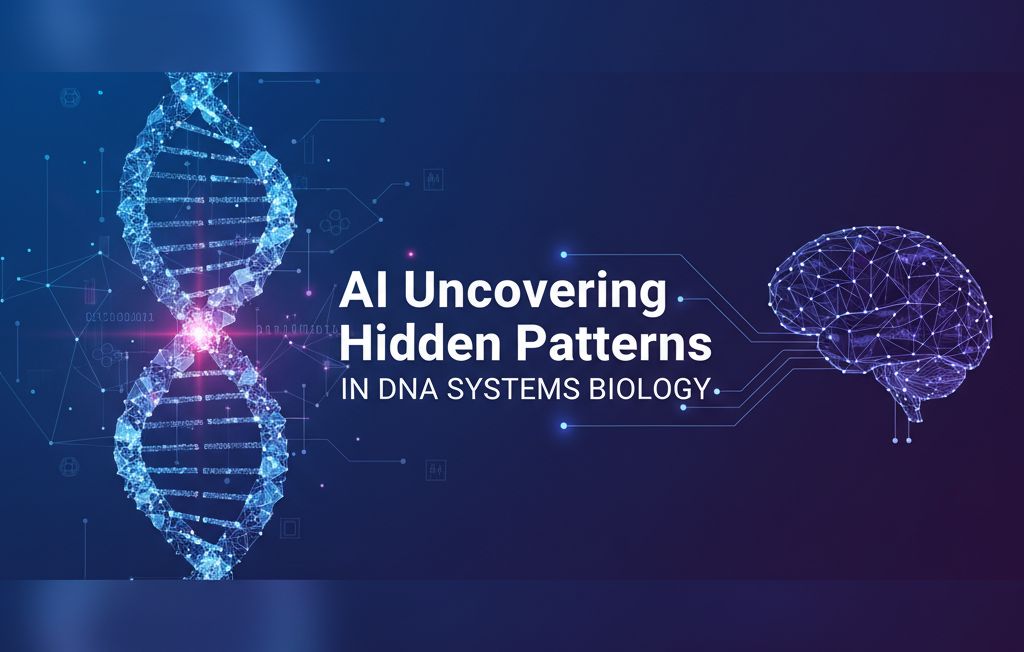
AI Uncovering Hidden Patterns in DNA Systems Biology
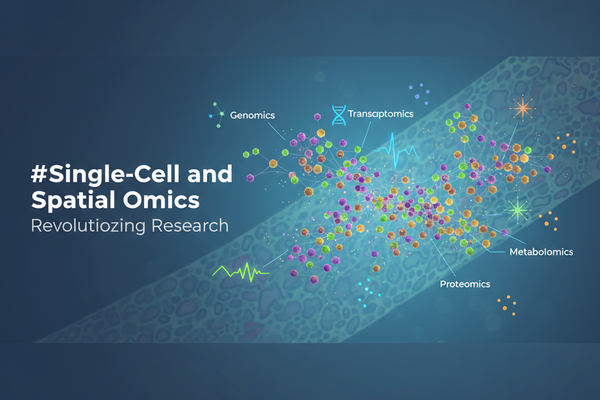
The human genome, a complex tapestry of over three billion base pairs, holds secrets that have eluded scientists for decades. Traditional methods of data analysis often struggle to untangle the intricate relationships within this genetic blueprint. Enter Artificial Intelligence (AI), a transformative force reshaping the landscape of systems biology. By harnessing AI's capabilities, researchers are beginning to uncover hidden patterns in DNA that could revolutionize our understanding of health and disease.
Key Takeaways
- AI models excel at processing large genomic datasets, revealing connections that traditional methods overlook.
- Machine learning algorithms can predict disease susceptibility by analyzing genetic variations across populations.
- AI-driven tools identify regulatory elements in DNA, leading to insights into gene expression and its impact on health.
- Collaborations between biologists and data scientists enhance the efficiency of AI in biological research.
- The integration of AI in DNA analysis accelerates discoveries, reducing the time from hypothesis to actionable insights.
- AI refines personalized medicine approaches by tailoring treatments based on individual genetic profiles.
- The future of genomics relies on continuous advancements in AI technologies to decode complex biological systems.
The Power of AI in Genomics
AI's strength lies in its ability to process vast amounts of genomic data far beyond human capability. For instance, deep learning algorithms can sift through millions of genetic sequences, identifying subtle patterns linked to diseases like cancer or diabetes. A recent study showcased how AI could uncover genetic variants that predispose individuals to specific conditions, facilitating early interventions and preventative measures.
Moreover, AI models are not just limited to data analysis. They can simulate biological processes, providing insights into how genes interact with each other and the environment. This dynamic modeling helps researchers visualize potential outcomes of genetic mutations, leading to a deeper understanding of complex diseases.
Unveiling Hidden Patterns
One of the most significant advancements in AI-driven genomics is its ability to uncover hidden patterns that remain obscured in traditional analyses. For example, AI tools can identify non-coding regions of DNA, often dismissed as "junk" DNA, that play crucial roles in gene regulation. By analyzing these regions, researchers can better understand how genes are turned on and off, shedding light on the mechanisms behind various diseases.
In a groundbreaking study published in Nature, researchers utilized AI to explore the regulatory landscape of the human genome. The findings revealed that certain non-coding regions are significantly associated with cancer risk, challenging the long-held belief that only coding regions hold critical information. Such discoveries exemplify how AI can lead to paradigm shifts in our understanding of genetics.
Collaboration is Key
The intersection of AI and biology requires interdisciplinary collaboration. Data scientists, bioinformaticians, and biologists must work side by side to maximize the potential of AI in genomics. This collaboration fosters an environment where data-driven insights can be translated into practical applications, such as new diagnostic tools or targeted therapies.
Platforms like Google DeepMind are at the forefront of this collaboration, employing AI to predict protein structures and their functions. Such initiatives not only accelerate the pace of discovery but also create a feedback loop where biological insights inform the development of more sophisticated AI models.
Accelerating Personalized Medicine
The integration of AI into DNA analysis is paving the way for personalized medicine. With AI's ability to analyze genetic data at scale, healthcare providers can tailor treatments to individuals based on their unique genetic makeup. For example, pharmacogenomics utilizes AI to predict how patients will respond to specific medications, reducing adverse effects and improving outcomes.
As AI continues to evolve, its role in personalized medicine will only expand. Imagine a future where routine genetic testing informs every aspect of healthcare, from preventative measures to treatment plans. The potential for improved patient outcomes is immense, as AI-driven insights enable more precise interventions.
The Future of AI in Genomics
Looking ahead, the future of AI in systems biology is bright. Ongoing advancements in machine learning and data processing will likely unlock even more mysteries within the human genome. As researchers refine their algorithms and improve data collection methods, the potential for AI to drive groundbreaking discoveries is limitless.
However, ethical considerations must remain at the forefront of these advancements. As AI uncovers hidden patterns in DNA, ensuring that this knowledge is used responsibly and equitably is paramount. The journey to deciphering the human genome is ongoing, but with AI as a key ally, the horizon is filled with promise.
In the quest to understand the blueprint of life, AI stands as a powerful tool, revealing hidden patterns and accelerating our journey toward a future where genomics and personalized medicine converge. The challenge remains: how will we harness these insights for the betterment of humanity?

MORE IN TRENDING
Being a good student can actually make you a better athlete
If you feel the desire to expand your expertise and start achieving in different aspects of your school life, then move forward from today knowing you don’t have to stay in the lane that you’re supposedly best at. How will you know what you can do if you don’t try? It’s time to break away from restrictive boundaries and push yourself past limits that you once thought impossible to reach.
Jade Josef .

Why playing D&D can be good for you
As you can see, these are just a few of the skills you can pick up from playing Dungeons & Dragons. These skills are directly applicable to other areas of your life too. They can play a major part in improving the way you live, work as part of a team, and socialize. So, the next time someone questions why you are spending so much time playing that ‘silly game’, you’ll be able to tell them!
Jade Josef .

Modern day gadgets with a retro twist
It’s always good to remember where we’ve come from. Nostalgia helps us do that, but just because we yearn for the past doesn’t mean that things were always better back then. The beauty of these gadgets is that we can admire what’s come before while still living in the present.
Emile Bartow .

What the ancients did better than us
As you can see, there are quite a few things that were around in ancient times that still exist today, and many of these things were actually better back then. Of course, better is a relative term, but you need to understand that a lot of these things were more effective and had fewer issues back in ancient times. These are just a handful of the things we reckon could be classed as being better way back when, but you’ll have to make up your own mind.
Jamie Levi .

Behind the Smart Greenhouses
The great thing about greenhouses is that they can run in just about any environment you can think of. That being said, both warmer and colder climates require greenhouses with additional electrical components (heaters or coolers) to create a stable setting for the plants. These new smart greenhouses could make it easier to grow food in areas of the globe with climates that would have the process unfeasible under normal circumstances. In the future, the Earth’s surface might be covered with these “2-in-1” farm/powerplant systems.
Jade Josef .