

AI-Powered Digital Pathology FDA Approvals: A Transformative Leap
By Jade Josef on February 6, 2026
AI-Powered Digital Pathology FDA Approvals: A Transformative Leap
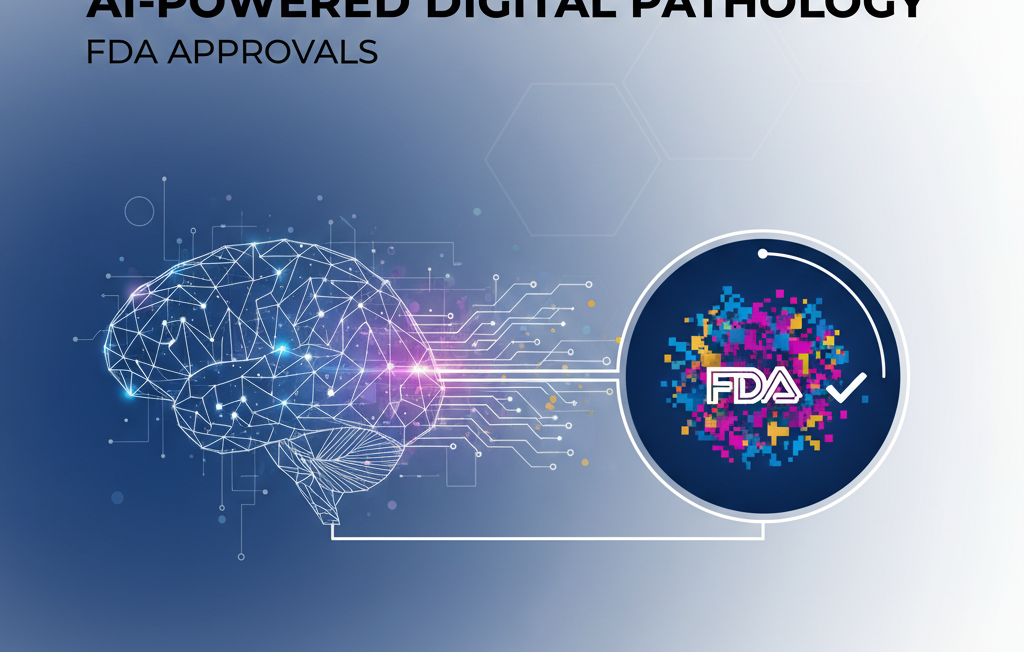
In the realm of biomedicine, AI-powered digital pathology is making waves, fundamentally altering how we process and interpret vast amounts of data. Recent FDA approvals for AI-based diagnostic tools are more than mere regulatory milestones; they signal a significant shift in the landscape of pathology. These advancements promise to enhance diagnostic accuracy and efficiency, potentially saving lives and resources.
Key Takeaways
- AI-powered digital pathology tools receive FDA approval, marking a significant advancement in medical diagnostics.
- The FDA is implementing methods to label devices that utilize AI, enhancing transparency for clinicians and patients.
- These technologies are crucial for increasing the speed and accuracy of cancer diagnoses.
- The integration of AI into pathology could reduce diagnostic errors, benefiting both healthcare providers and patients.
- AI tools can analyze complex medical images, providing insights that human pathologists might overlook.
- The regulatory landscape is evolving to keep pace with rapid technological advancements in digital pathology.
- Future developments in this field may further streamline workflows in laboratories, improving patient outcomes.
The FDA's Role in AI Innovation
The FDA's recent approvals of AI-powered digital pathology tools showcase the agency's commitment to fostering innovation while ensuring patient safety. By establishing robust frameworks for evaluating these technologies, the FDA is not just approving devices; it is paving the way for a new standard in medical diagnostics. The agency plans to implement tagging methods for AI-integrated devices, which will help clinicians understand the technology's role in diagnostics and treatment plans.
This proactive approach by the FDA sets a precedent, encouraging developers to create more advanced tools and providing transparency for end-users. Ultimately, this means that doctors can make better-informed decisions, guided by AI insights, which could lead to improved patient outcomes.
Transforming Pathology with AI
The integration of artificial intelligence into pathology allows for the rapid analysis of complex medical images. Traditional pathology relies heavily on human interpretation of slides, a process that can be time-consuming and prone to error. AI algorithms, however, can sift through thousands of images, identifying patterns and anomalies that may be missed by human eyes.
For instance, AI tools have shown remarkable promise in identifying cancerous cells with higher accuracy than traditional methods. According to a study published in a leading medical journal, AI systems successfully diagnosed breast cancer in pathology slides with an accuracy rate exceeding 94%. This level of precision not only saves time but also enhances the overall reliability of diagnoses.
The Challenges Ahead
Despite the promise of AI in digital pathology, challenges remain. One major hurdle is the need for extensive training and validation of AI algorithms to ensure their reliability across diverse populations and clinical settings. Each pathology lab presents unique variables, from the quality of samples to the expertise of the staff, all of which can impact diagnostic outcomes.
Additionally, as AI tools become more prevalent, the need for pathologists to adapt to these technologies grows. Training programs must evolve to equip future medical professionals with the skills to work alongside AI systems effectively. This collaboration between human expertise and machine learning will be crucial for the success of AI in pathology.
Looking Forward
The future of AI-powered digital pathology is bright, with ongoing research and development promising even more sophisticated tools. As these technologies gain traction, we can expect to see a significant reduction in diagnostic errors and an increase in the speed at which results are delivered. This evolution could lead to more personalized treatment plans and better management of diseases, particularly in oncology.
Moreover, as the regulatory landscape continues to adapt to these innovations, it will be vital for stakeholders to engage actively in discussions about the ethical implications of AI in medicine. Transparency, accountability, and ongoing education will be crucial as we navigate this new frontier.
In conclusion, the FDA's approvals of AI-powered digital pathology tools mark a significant turning point in the medical field. As we harness the power of artificial intelligence to enhance diagnostic processes, the ultimate goal remains clear: better outcomes for patients. The journey is just beginning, but the potential for transformation is immense. Embracing these advancements could redefine how we approach healthcare in the years to come.
MORE IN TRENDING
Being a good student can actually make you a better athlete
If you feel the desire to expand your expertise and start achieving in different aspects of your school life, then move forward from today knowing you don’t have to stay in the lane that you’re supposedly best at. How will you know what you can do if you don’t try? It’s time to break away from restrictive boundaries and push yourself past limits that you once thought impossible to reach.
Jade Josef .

Why playing D&D can be good for you
As you can see, these are just a few of the skills you can pick up from playing Dungeons & Dragons. These skills are directly applicable to other areas of your life too. They can play a major part in improving the way you live, work as part of a team, and socialize. So, the next time someone questions why you are spending so much time playing that ‘silly game’, you’ll be able to tell them!
Jade Josef .

Modern day gadgets with a retro twist
It’s always good to remember where we’ve come from. Nostalgia helps us do that, but just because we yearn for the past doesn’t mean that things were always better back then. The beauty of these gadgets is that we can admire what’s come before while still living in the present.
Emile Bartow .

What the ancients did better than us
As you can see, there are quite a few things that were around in ancient times that still exist today, and many of these things were actually better back then. Of course, better is a relative term, but you need to understand that a lot of these things were more effective and had fewer issues back in ancient times. These are just a handful of the things we reckon could be classed as being better way back when, but you’ll have to make up your own mind.
Jamie Levi .

Behind the Smart Greenhouses
The great thing about greenhouses is that they can run in just about any environment you can think of. That being said, both warmer and colder climates require greenhouses with additional electrical components (heaters or coolers) to create a stable setting for the plants. These new smart greenhouses could make it easier to grow food in areas of the globe with climates that would have the process unfeasible under normal circumstances. In the future, the Earth’s surface might be covered with these “2-in-1” farm/powerplant systems.
Jade Josef .