

AI-Augmented Molecular Design Transforms Early Drug Discovery
By Emile Bartow on February 6, 2026
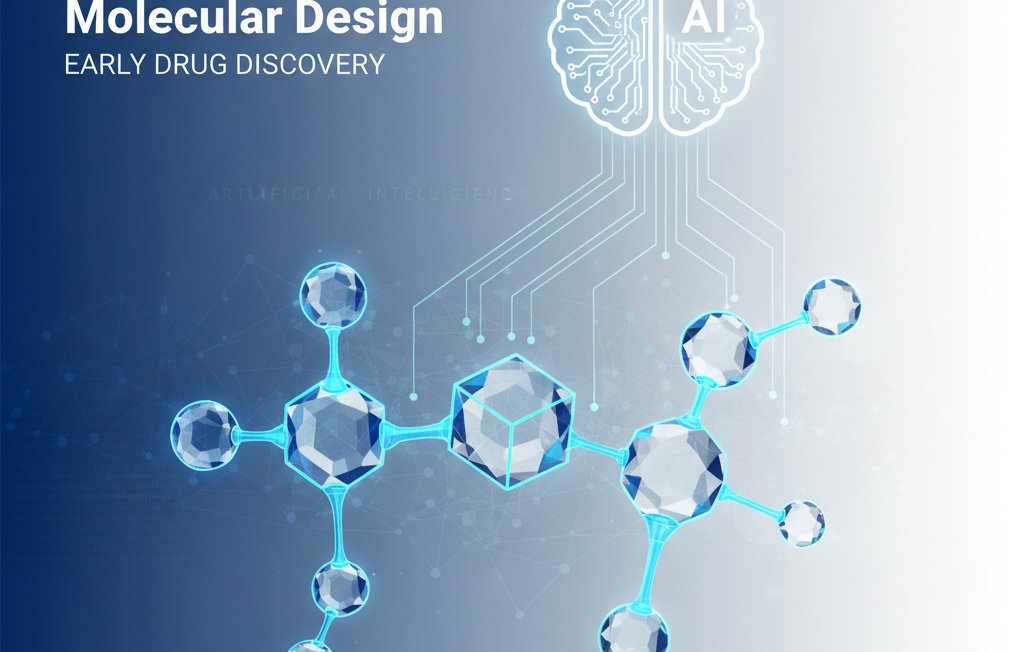
AI-Augmented Molecular Design in Early Drug Discovery
Artificial intelligence is not just a buzzword in the pharmaceutical industry; it's a transformative tool that reshapes the early stages of drug discovery. Imagine a lab where algorithms not only assist but enhance the creativity and precision of scientists. This is where AI-augmented molecular design comes into play, fundamentally changing how we develop new drugs.
Key Takeaways
- AI tools accelerate lead optimization by predicting molecular properties, significantly reducing time and costs.
- Machine learning models can analyze vast datasets to identify promising compounds that traditional methods might overlook.
- AI-driven simulations allow for real-time adjustments in molecular design, enhancing safety and efficacy profiles.
- Collaborative platforms like DeepChem and ChemAI democratize access to advanced molecular modeling tools for researchers worldwide.
- Data-scarce environments can benefit from AI by leveraging generative models to propose novel solutions for formulation challenges.
- AI integration in molecular design promotes cross-disciplinary collaboration, bridging chemistry, biology, and computational science.
The AI Revolution in Molecular Design
The pharmaceutical landscape is evolving as AI becomes embedded in molecular and materials research. A notable shift is the move from trial-and-error methods to data-driven approaches in drug discovery. With AI, researchers can analyze vast datasets, identifying patterns that reveal potential lead compounds. This leap is not just theoretical; AI can now predict molecular interactions, helping chemists design more effective drugs faster than ever.
For example, platforms like DeepMind's AlphaFold have made headlines by predicting protein structures with remarkable accuracy. This has significant implications for drug discovery, as understanding protein interactions is crucial for developing effective therapeutics. By leveraging AI, researchers can anticipate how new drug candidates will behave in complex biological systems, allowing for more informed design choices.
Enhancing Lead Optimization
Lead optimization is a critical phase in drug development, where researchers refine compounds to improve their effectiveness and reduce side effects. AI enhances this stage significantly. Traditional approaches often involve synthesizing numerous compounds and testing them in a lab, which can be time-consuming and expensive. AI models can predict the success of various chemical modifications, guiding researchers toward the most promising candidates with minimal experimental effort.
For instance, the use of machine learning algorithms can predict how changes in molecular structure will affect biological activity. This leads to a more targeted approach, allowing researchers to focus on the compounds most likely to succeed in clinical trials. This not only speeds up the process but also reduces the financial burden associated with drug development.
Navigating Data Scarcity
One of the biggest challenges in drug discovery is navigating data scarcity, especially in early-stage research. Many potential drug candidates fall by the wayside due to insufficient data on their properties and interactions. AI can bridge this gap by generating predictive models based on available information, thus guiding researchers in areas where data is limited.
Generative models, such as those developed in recent studies, can propose new molecular structures that meet specific criteria, even when existing data is sparse. This approach opens up new avenues for discovery, enabling researchers to explore uncharted territory in molecular design. By tapping into AI's ability to synthesize information from disparate sources, scientists can overcome the limitations imposed by traditional data-driven methods.
Collaborative Tools and Platforms
The democratization of AI tools is transforming molecular design. Platforms like ChemAI and OpenAI's Codex are making advanced modeling accessible to a broader audience. This shift encourages collaboration across disciplines, allowing chemists, biologists, and data scientists to work together more efficiently.
These collaborative platforms foster an environment where innovative ideas can flourish. Researchers can share insights, build on one another's findings, and collectively push the boundaries of what's possible in drug discovery. This cross-pollination of expertise is vital in an era where complex biological systems require multifaceted approaches to drug design.
Looking Ahead: The Future of Drug Discovery
As AI continues to evolve, its integration into molecular design heralds a new era in drug discovery. The potential for real-time molecular adjustments and enhanced safety profiles cannot be overstated. Imagine a scenario where researchers can tweak a molecule's structure on the fly, instantly assessing its potential impact on efficacy and safety.
This future is not far off. The ongoing advancement of AI technologies promises to streamline the drug development process, making it not only faster but also more reliable. The challenge remains for researchers and pharmaceutical companies to embrace this change actively. By leveraging AI, the industry can unlock new possibilities and bring innovative therapies to market more efficiently.
In conclusion, AI-augmented molecular design is redefining the landscape of early drug discovery. As we stand on the brink of this new frontier, the potential for transformative breakthroughs in medicine is immense. The question now isn't whether AI will influence drug discovery but how quickly its benefits will be realized in laboratories around the world.


MORE IN TRENDING
Being a good student can actually make you a better athlete
If you feel the desire to expand your expertise and start achieving in different aspects of your school life, then move forward from today knowing you don’t have to stay in the lane that you’re supposedly best at. How will you know what you can do if you don’t try? It’s time to break away from restrictive boundaries and push yourself past limits that you once thought impossible to reach.
Jade Josef .

Why playing D&D can be good for you
As you can see, these are just a few of the skills you can pick up from playing Dungeons & Dragons. These skills are directly applicable to other areas of your life too. They can play a major part in improving the way you live, work as part of a team, and socialize. So, the next time someone questions why you are spending so much time playing that ‘silly game’, you’ll be able to tell them!
Jade Josef .

Modern day gadgets with a retro twist
It’s always good to remember where we’ve come from. Nostalgia helps us do that, but just because we yearn for the past doesn’t mean that things were always better back then. The beauty of these gadgets is that we can admire what’s come before while still living in the present.
Emile Bartow .

What the ancients did better than us
As you can see, there are quite a few things that were around in ancient times that still exist today, and many of these things were actually better back then. Of course, better is a relative term, but you need to understand that a lot of these things were more effective and had fewer issues back in ancient times. These are just a handful of the things we reckon could be classed as being better way back when, but you’ll have to make up your own mind.
Jamie Levi .

Behind the Smart Greenhouses
The great thing about greenhouses is that they can run in just about any environment you can think of. That being said, both warmer and colder climates require greenhouses with additional electrical components (heaters or coolers) to create a stable setting for the plants. These new smart greenhouses could make it easier to grow food in areas of the globe with climates that would have the process unfeasible under normal circumstances. In the future, the Earth’s surface might be covered with these “2-in-1” farm/powerplant systems.
Jade Josef .