

5 Scientific Discoveries That Changed the World in the Last Decade
By Emile Bartow on June 11, 2026
Scientific progress often happens gradually, with years of research leading to breakthroughs that can transform how we understand the world. Over the last decade, several major discoveries have expanded human knowledge, opened new areas of research, and created technologies with the potential to affect millions of lives.
While many important advances have occurred across different fields, a handful stand out because of their scientific significance and long-term impact. These discoveries not only answered important questions but also created new possibilities for the future.
Key Takeaways
- The past decade has produced breakthroughs in genetics, space science, and medicine
- Scientific discoveries often create opportunities for future innovations
- Many major advances result from decades of prior research
- New technologies are helping scientists explore previously inaccessible areas
- Recent discoveries continue to influence healthcare, physics, and our understanding of the universe
1. CRISPR Gene Editing Revolutionized Genetics
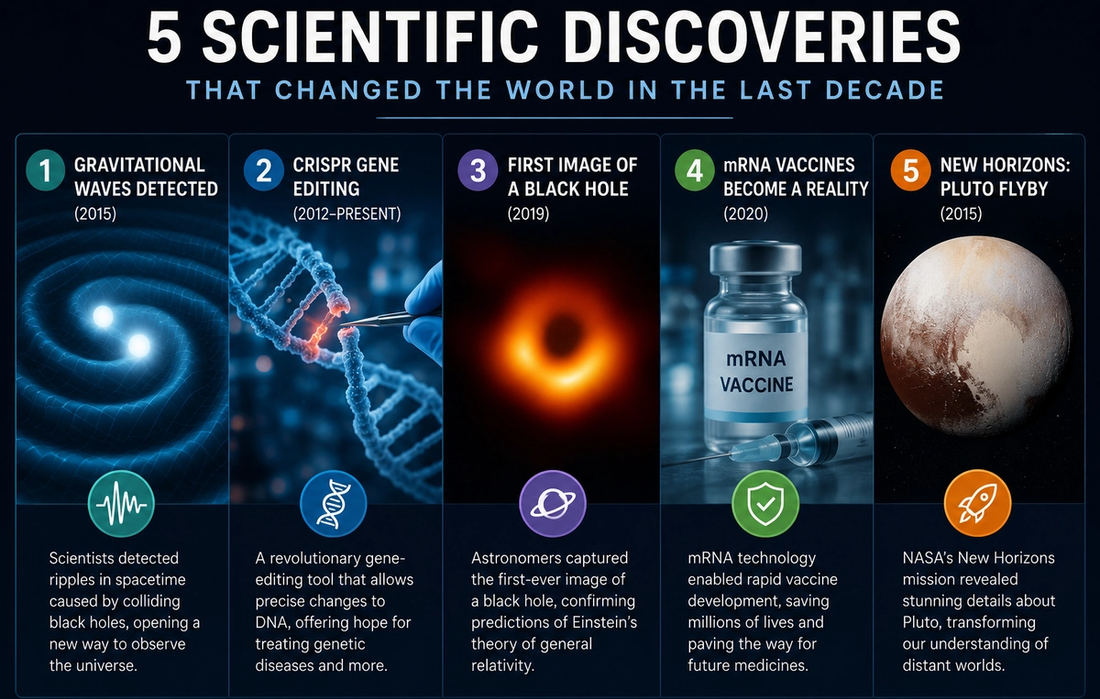
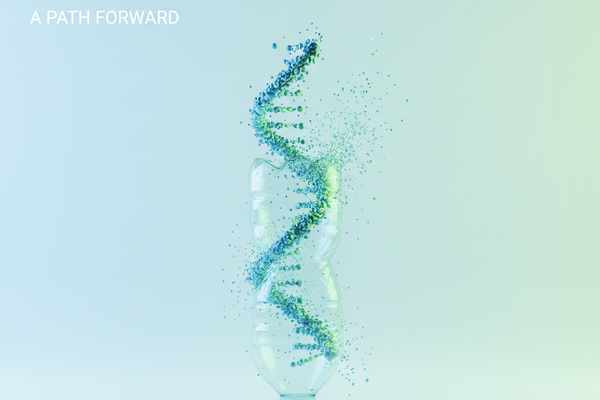
Gene editing existed before the last decade, but the development of CRISPR technology transformed the field by making genetic modification faster, more precise, and more accessible.
CRISPR allows scientists to edit DNA with unprecedented accuracy, creating new possibilities for studying diseases and developing treatments for genetic disorders. Researchers are exploring applications ranging from inherited diseases to agriculture and biotechnology.
Its impact has been so significant that it is widely regarded as one of the most important biological breakthroughs of the modern era.
2. Gravitational Waves Were Detected for the First Time
For decades, gravitational waves existed only as a prediction of Albert Einstein’s theory of general relativity.
In 2015, scientists directly detected these ripples in space-time for the first time. The discovery confirmed a major prediction made nearly a century earlier and opened an entirely new way of studying the universe.
Instead of observing space solely through light, researchers can now gather information through gravitational-wave astronomy, providing insights into events such as black hole collisions and neutron star mergers.
3. The First Image of a Black Hole
Black holes were long understood through indirect evidence, but in 2019 scientists achieved something previously thought impossible: capturing an image of one.
Using a global network of telescopes working together as a virtual Earth-sized instrument, researchers produced the first image of the black hole at the center of the galaxy Messier 87.
The image became one of the most iconic scientific achievements of the decade and provided powerful confirmation of theoretical predictions about black holes.
4. mRNA Technology Changed Modern Medicine
Although mRNA research had been underway for many years, the technology reached global prominence during the COVID-19 pandemic.
Scientists demonstrated that mRNA-based vaccines could be developed rapidly and deployed at an unprecedented scale. Beyond their role in combating COVID-19, researchers are now exploring mRNA applications for cancer treatments, infectious diseases, and other medical conditions.
The success of this approach may influence vaccine development and medical research for decades to come.
5. Thousands of New Exoplanets Expanded Our View of the Universe
The last decade saw a dramatic increase in the discovery of exoplanets—planets located outside our solar system.
Advanced space telescopes and observational techniques have identified thousands of these worlds, including some that may possess conditions suitable for life. These discoveries have transformed our understanding of planetary systems and demonstrated that planets are far more common than once believed.
The search for potentially habitable worlds remains one of the most exciting areas of modern astronomy.
Why Scientific Breakthroughs Matter
Scientific discoveries do more than answer questions. They often create entirely new fields of research and provide tools that future generations can build upon.
Many of the breakthroughs celebrated today are the result of decades of work by researchers who contributed small pieces to a much larger puzzle. The impact of a discovery may not always be immediately obvious, but its influence can grow over time as new applications emerge.
History shows that some of the most transformative innovations begin as fundamental scientific research.
A Decade of Discovery
The past ten years have expanded humanity’s understanding of life, medicine, physics, and the universe itself. From editing genes and detecting gravitational waves to imaging black holes and developing new medical technologies, scientists have achieved milestones that once seemed impossible.
These discoveries remind us that scientific progress continues to push the boundaries of what humans can observe, understand, and accomplish.
While it is impossible to know what the next decade will bring, one thing is certain: the discoveries made today will help shape the technologies, treatments, and scientific breakthroughs of tomorrow.


MORE IN TRENDING
Being a good student can actually make you a better athlete
If you feel the desire to expand your expertise and start achieving in different aspects of your school life, then move forward from today knowing you don’t have to stay in the lane that you’re supposedly best at. How will you know what you can do if you don’t try? It’s time to break away from restrictive boundaries and push yourself past limits that you once thought impossible to reach.
Jade Josef .

Why playing D&D can be good for you
As you can see, these are just a few of the skills you can pick up from playing Dungeons & Dragons. These skills are directly applicable to other areas of your life too. They can play a major part in improving the way you live, work as part of a team, and socialize. So, the next time someone questions why you are spending so much time playing that ‘silly game’, you’ll be able to tell them!
Jade Josef .

Modern day gadgets with a retro twist
It’s always good to remember where we’ve come from. Nostalgia helps us do that, but just because we yearn for the past doesn’t mean that things were always better back then. The beauty of these gadgets is that we can admire what’s come before while still living in the present.
Emile Bartow .

What the ancients did better than us
As you can see, there are quite a few things that were around in ancient times that still exist today, and many of these things were actually better back then. Of course, better is a relative term, but you need to understand that a lot of these things were more effective and had fewer issues back in ancient times. These are just a handful of the things we reckon could be classed as being better way back when, but you’ll have to make up your own mind.
Jamie Levi .

Behind the Smart Greenhouses
The great thing about greenhouses is that they can run in just about any environment you can think of. That being said, both warmer and colder climates require greenhouses with additional electrical components (heaters or coolers) to create a stable setting for the plants. These new smart greenhouses could make it easier to grow food in areas of the globe with climates that would have the process unfeasible under normal circumstances. In the future, the Earth’s surface might be covered with these “2-in-1” farm/powerplant systems.
Jade Josef .