

5 Psychology Tricks That Actually Improve Your Mood
By Emile Bartow on June 11, 2026
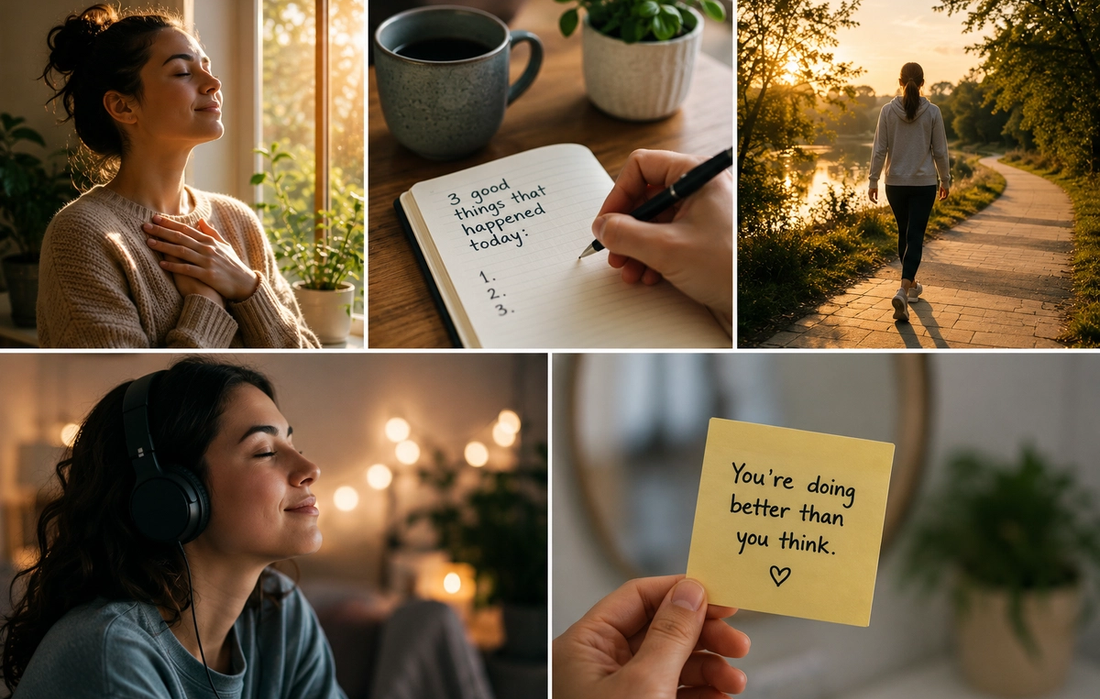
Everyone has days when they feel stressed, unmotivated, or simply off. When that happens, many people assume they need a major change—a vacation, a new job, or a dramatic life improvement—to feel better.
In reality, mood is often influenced by surprisingly small factors.
Psychologists have spent decades studying the relationship between thoughts, behavior, and emotions. While there is no magic formula for happiness, research suggests that certain simple actions can have a meaningful impact on how we feel.
The best part? Many of them take only a few minutes.
Key Takeaways
- Small behavioral changes can influence mood more than people realize
- Action often improves mood faster than waiting for motivation
- Social connection plays a major role in emotional well-being
- Attention and perspective affect how experiences are interpreted
- Consistent habits tend to produce stronger results than occasional efforts
1. Act Before You Feel Like It
One of the most useful ideas in psychology is that action often comes before motivation, not after.
When people feel low, they frequently wait until they feel motivated to exercise, clean, socialize, or start a project. Unfortunately, motivation may not arrive on its own.
Behavioral psychologists have found that taking a small action first can create momentum and improve mood.
A short walk, a simple task, or five minutes of progress can often shift how you feel more effectively than continuing to think about the task.
Sometimes movement creates motivation—not the other way around.
2. Use the “Best Friend Test”
People are often much harsher toward themselves than they are toward others.
When something goes wrong, self-criticism can become automatic. Yet if a friend experienced the same situation, most people would respond with understanding and encouragement.
The next time you are stuck in negative self-talk, ask yourself a simple question:
“What would I say to a close friend in this situation?”
This small mental shift can help create perspective and reduce unnecessary self-judgment.
Compassion is often easier to offer others than ourselves, but it works both ways.
3. Change Your Environment
Mood is influenced by surroundings more than many people realize.
Spending hours in the same room, looking at the same screens, and following the same routine can contribute to mental stagnation.
A simple change of environment can create a noticeable shift in how you feel.
Go outside, sit in a different room, work from a café, take a walk, or spend time in a park. The change does not need to be dramatic.
New surroundings provide fresh sensory input and can interrupt negative thought patterns.
4. Focus on One Good Thing
The human brain naturally pays more attention to threats and problems than positive experiences.
This tendency, often called negativity bias, helped our ancestors survive but can make modern life feel more stressful than it actually is.
One way to counter this is intentionally directing attention toward positive experiences.
At the end of the day, identify one thing that went well. It does not have to be life-changing. A good conversation, a productive hour, a great meal, or a small accomplishment is enough.
Training yourself to notice positive moments can gradually change how you evaluate your day.
5. Reach Out to Someone
When people feel down, they often withdraw from others.
Unfortunately, isolation tends to make negative emotions feel larger and more difficult to manage.
Even brief social interactions can improve mood. A text message, phone call, coffee with a friend, or short conversation can create a sense of connection that reduces feelings of loneliness and stress.
You do not need to discuss deep emotional topics.
Often, simply interacting with another person is enough to create a positive shift.
Small Actions, Real Results
Improving your mood does not always require dramatic solutions.
While serious mental health challenges may require professional support, everyday emotional ups and downs are often influenced by small choices and habits. The actions you take, the thoughts you practice, and the people you connect with can all shape how you feel.
The key insight from psychology is surprisingly simple:
You do not always need to feel better before taking action.
Sometimes taking action is what helps you feel better in the first place.




MORE IN TRENDING
Being a good student can actually make you a better athlete
If you feel the desire to expand your expertise and start achieving in different aspects of your school life, then move forward from today knowing you don’t have to stay in the lane that you’re supposedly best at. How will you know what you can do if you don’t try? It’s time to break away from restrictive boundaries and push yourself past limits that you once thought impossible to reach.
Jade Josef .

Why playing D&D can be good for you
As you can see, these are just a few of the skills you can pick up from playing Dungeons & Dragons. These skills are directly applicable to other areas of your life too. They can play a major part in improving the way you live, work as part of a team, and socialize. So, the next time someone questions why you are spending so much time playing that ‘silly game’, you’ll be able to tell them!
Jade Josef .

Modern day gadgets with a retro twist
It’s always good to remember where we’ve come from. Nostalgia helps us do that, but just because we yearn for the past doesn’t mean that things were always better back then. The beauty of these gadgets is that we can admire what’s come before while still living in the present.
Emile Bartow .

What the ancients did better than us
As you can see, there are quite a few things that were around in ancient times that still exist today, and many of these things were actually better back then. Of course, better is a relative term, but you need to understand that a lot of these things were more effective and had fewer issues back in ancient times. These are just a handful of the things we reckon could be classed as being better way back when, but you’ll have to make up your own mind.
Jamie Levi .

Behind the Smart Greenhouses
The great thing about greenhouses is that they can run in just about any environment you can think of. That being said, both warmer and colder climates require greenhouses with additional electrical components (heaters or coolers) to create a stable setting for the plants. These new smart greenhouses could make it easier to grow food in areas of the globe with climates that would have the process unfeasible under normal circumstances. In the future, the Earth’s surface might be covered with these “2-in-1” farm/powerplant systems.
Jade Josef .